Skip to content
← Work

Personal/Experimental · Endurance & Perspective

Camino de Santiago — 30 Days on Foot Across Spain

Walked the Camino de Santiago over 30 days as the culmination of a two-month solo journey across Europe — an education in endurance, self-reliance, and presence.
past · Summer 2025

Camino de Santiago — 30 Days on Foot Across Spain — evidence
Evidence

What This Was

At the end of a two-month solo journey across Europe, I walked the Camino de Santiago — roughly 500 miles across northern Spain, on foot, over 30 consecutive days.

What It Trained

  • Endurance — a long objective that cannot be rushed, only walked. Progress arrives one day at a time or not at all — the same compounding logic that governs capital, skill, and trust.
  • Self-reliance — every day's food, lodging, navigation, and recovery was my own problem to solve, in a language and country not my own.
  • Cross-cultural communication — the Camino gathers people from every continent. A month of shared tables and shared roads is a practical education in reading people across language and custom.
  • Presence — with no schedule but the road, attention returns to what is actually in front of you. That capacity transfers directly to analytical work: seeing what is there, rather than what you expected.

Why It Belongs Here

Professional judgment is built partly from unusual inputs. A month of sustained, self-directed effort across a foreign country is a different kind of credential — evidence of the ability to commit to a long objective, adapt daily, and finish.

Evidence

The gallery below follows the road in order — from Saint-Jean-Pied-de-Port over the Pyrenees, across the Meseta, through León and the Cruz de Ferro, into Galicia, and finally to the cathedral square in Santiago de Compostela. Thirty-five photographs from thirty days on foot.

In pictures

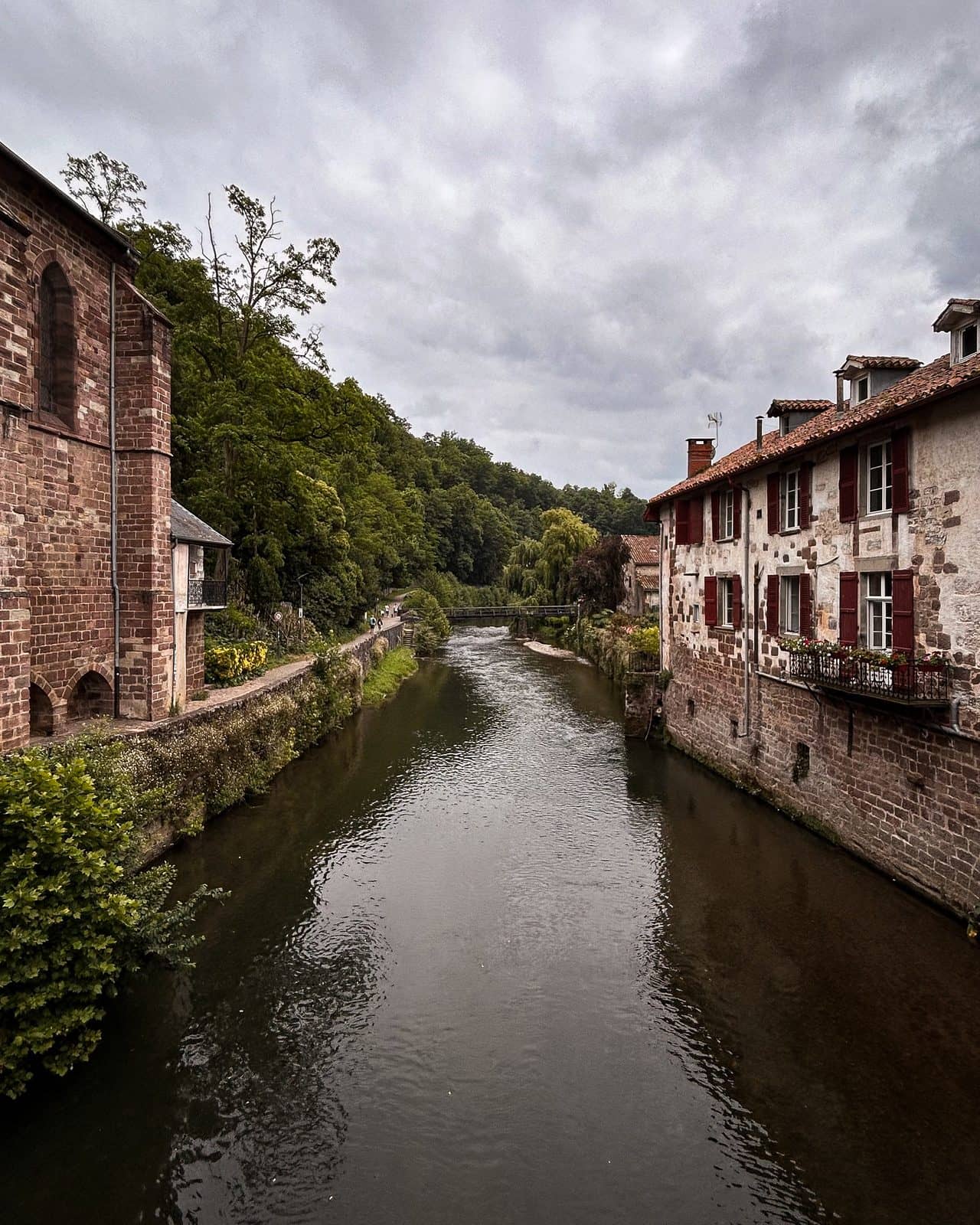
Stone houses of Saint-Jean-Pied-de-Port rising over the River Nive, the traditional starting point of the Camino Francés.
Day one — Saint-Jean-Pied-de-Port, France.
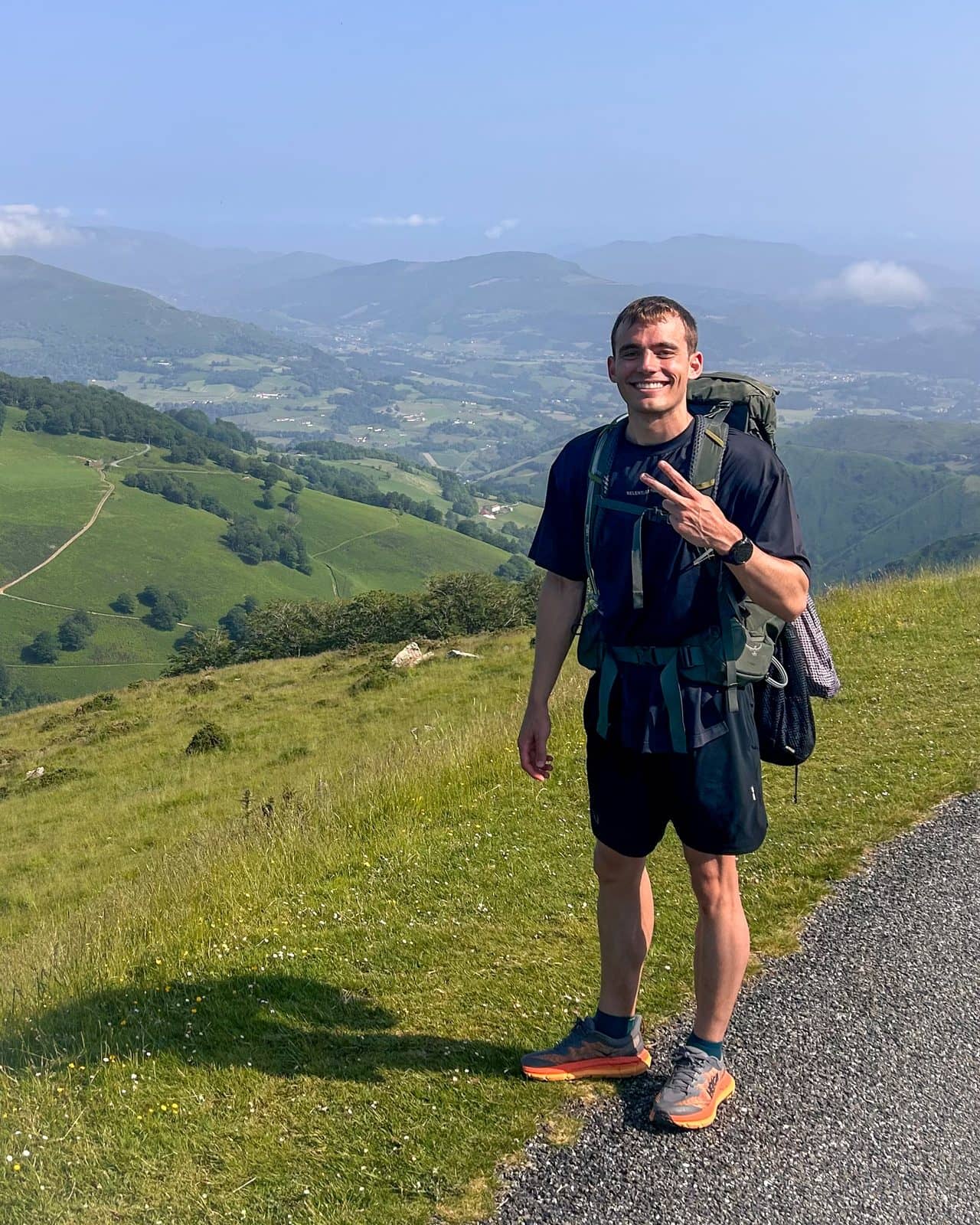
Kyle Wisniewski with a full pack on the Route Napoléon over the Pyrenees, green Basque valleys falling away behind him.
Crossing the Pyrenees on the Route Napoléon.
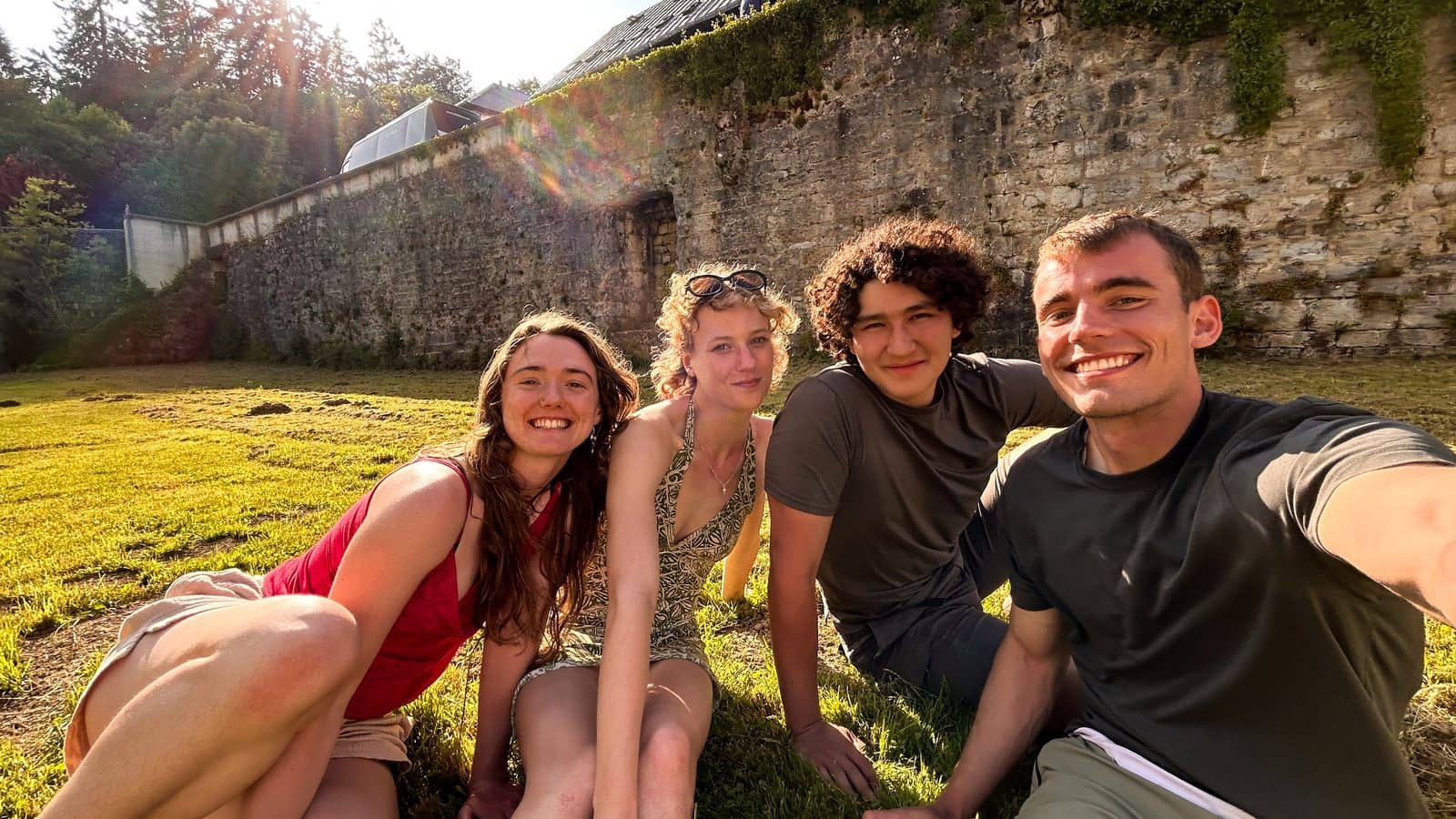
Kyle and three fellow pilgrims resting on the grass beside an old stone wall in the first days of the walk.
Strangers in week one.
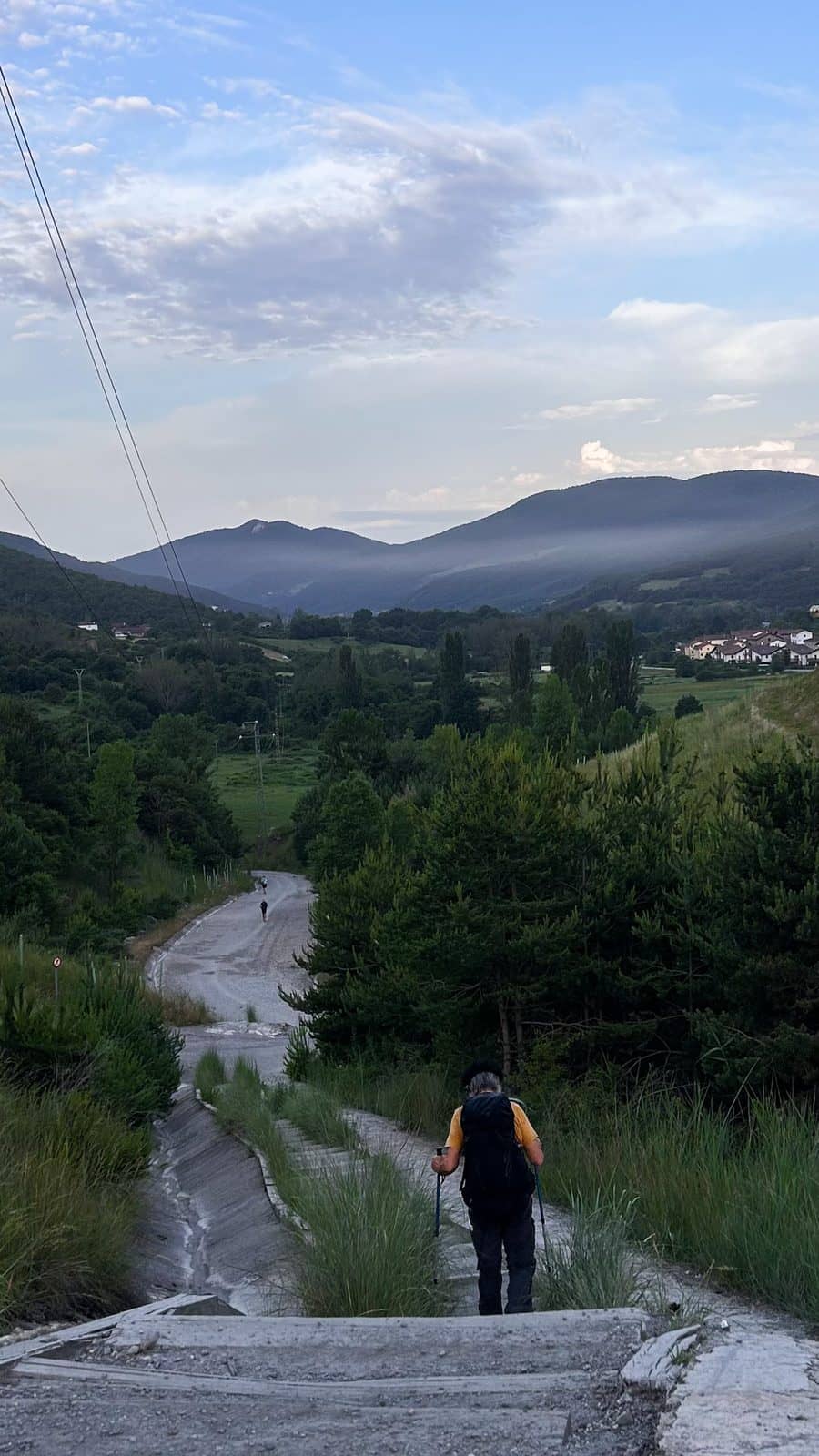
A lone pilgrim descending a stone path into a green Navarrese valley under morning cloud.
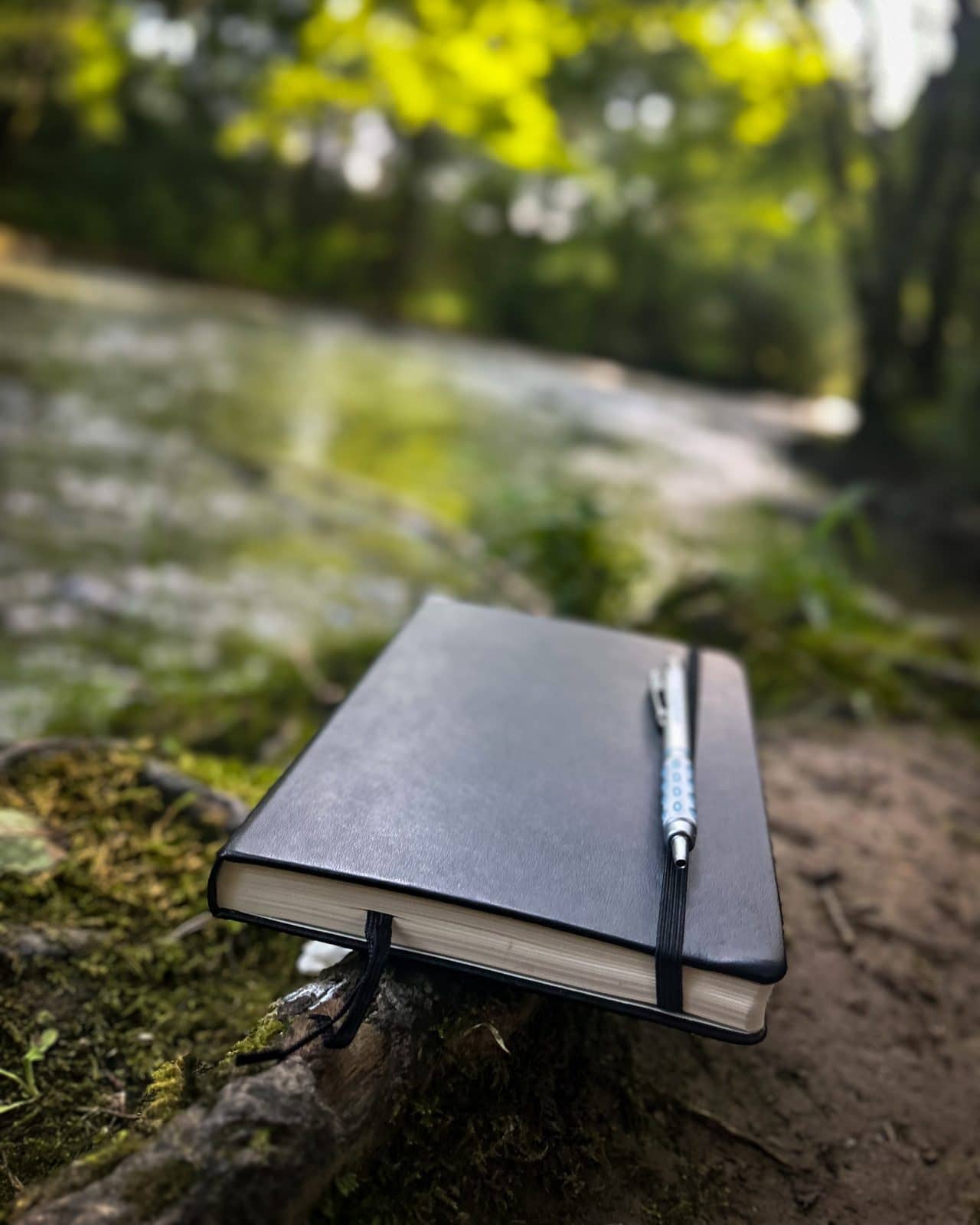
A pocket journal and pen resting on stone beside the trail.
The daily writing that later became essays.
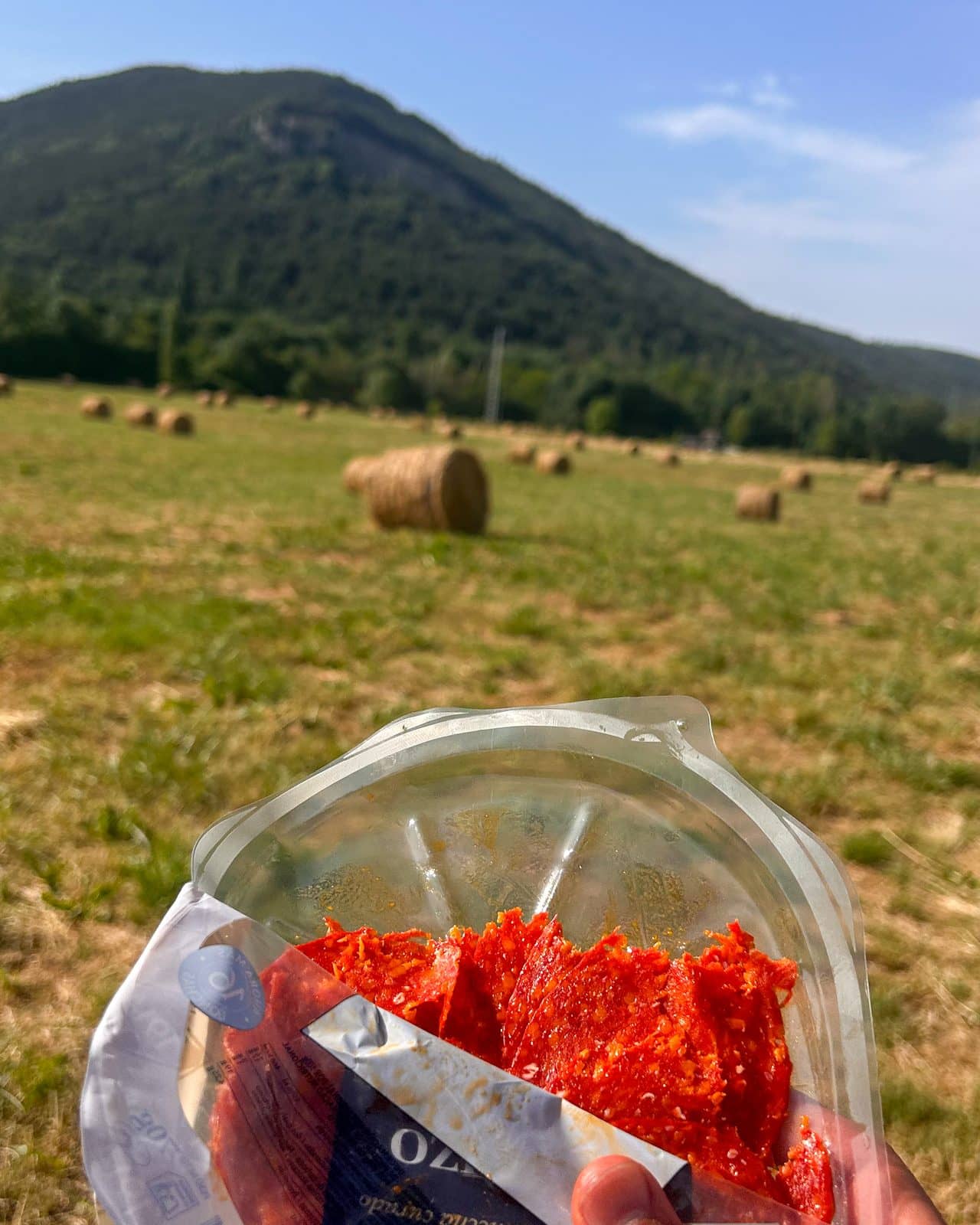
A roadside lunch held up against fresh hay bales and green hills in Navarra.
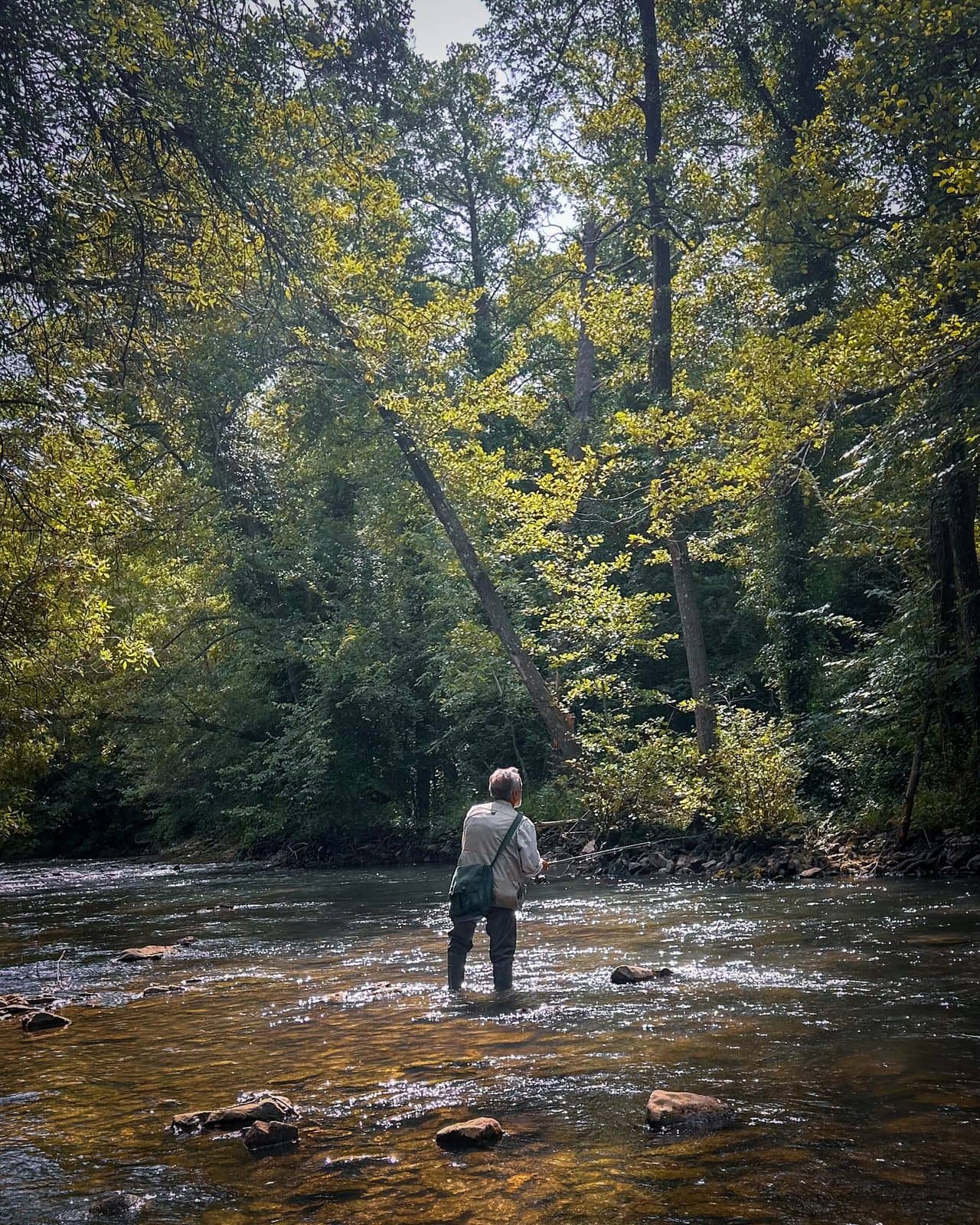
A pilgrim wading into a forest river midstream to cool off on a hot afternoon.
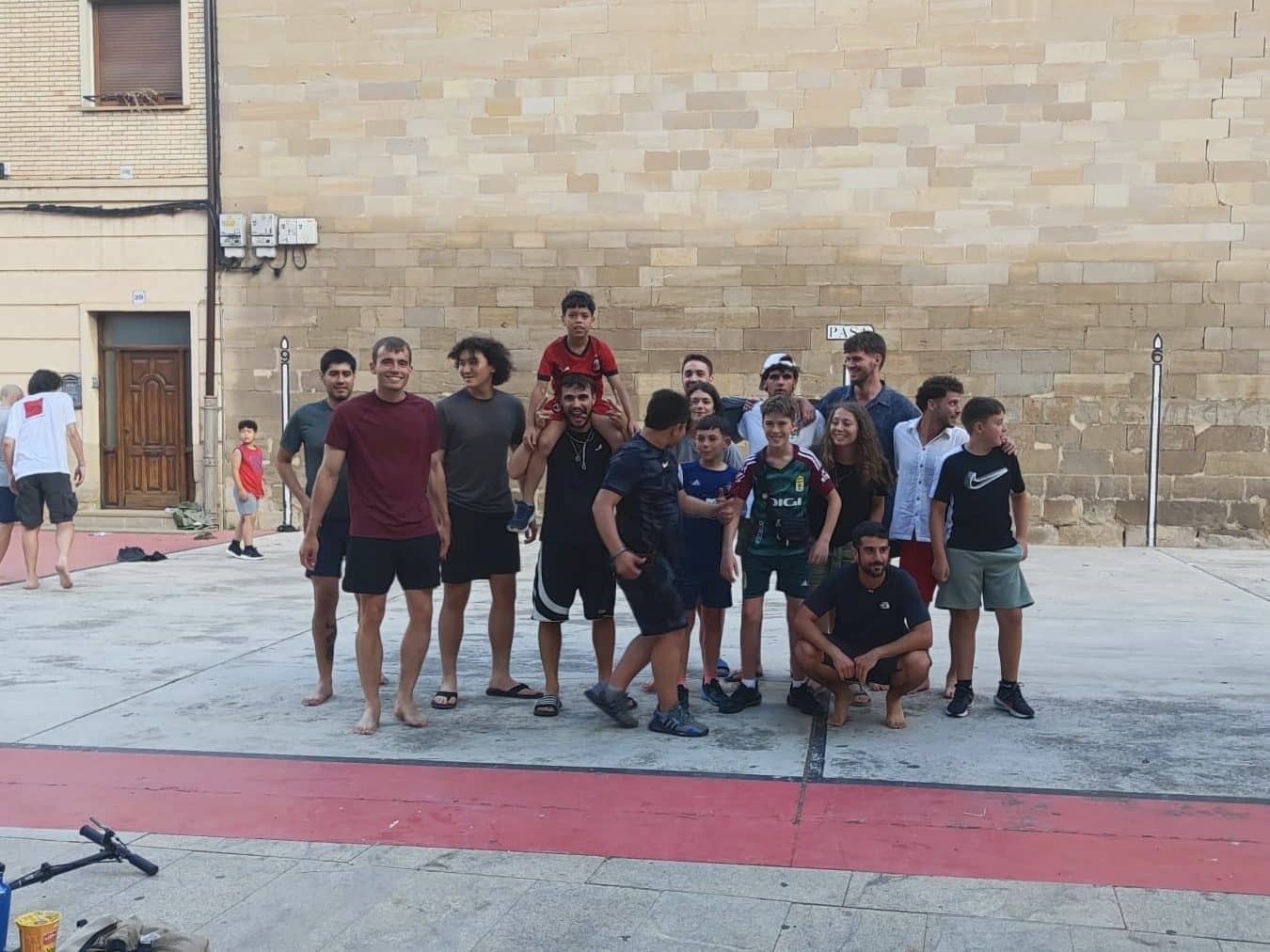
A crowd of pilgrims gathered for an evening game on a village fronton court.
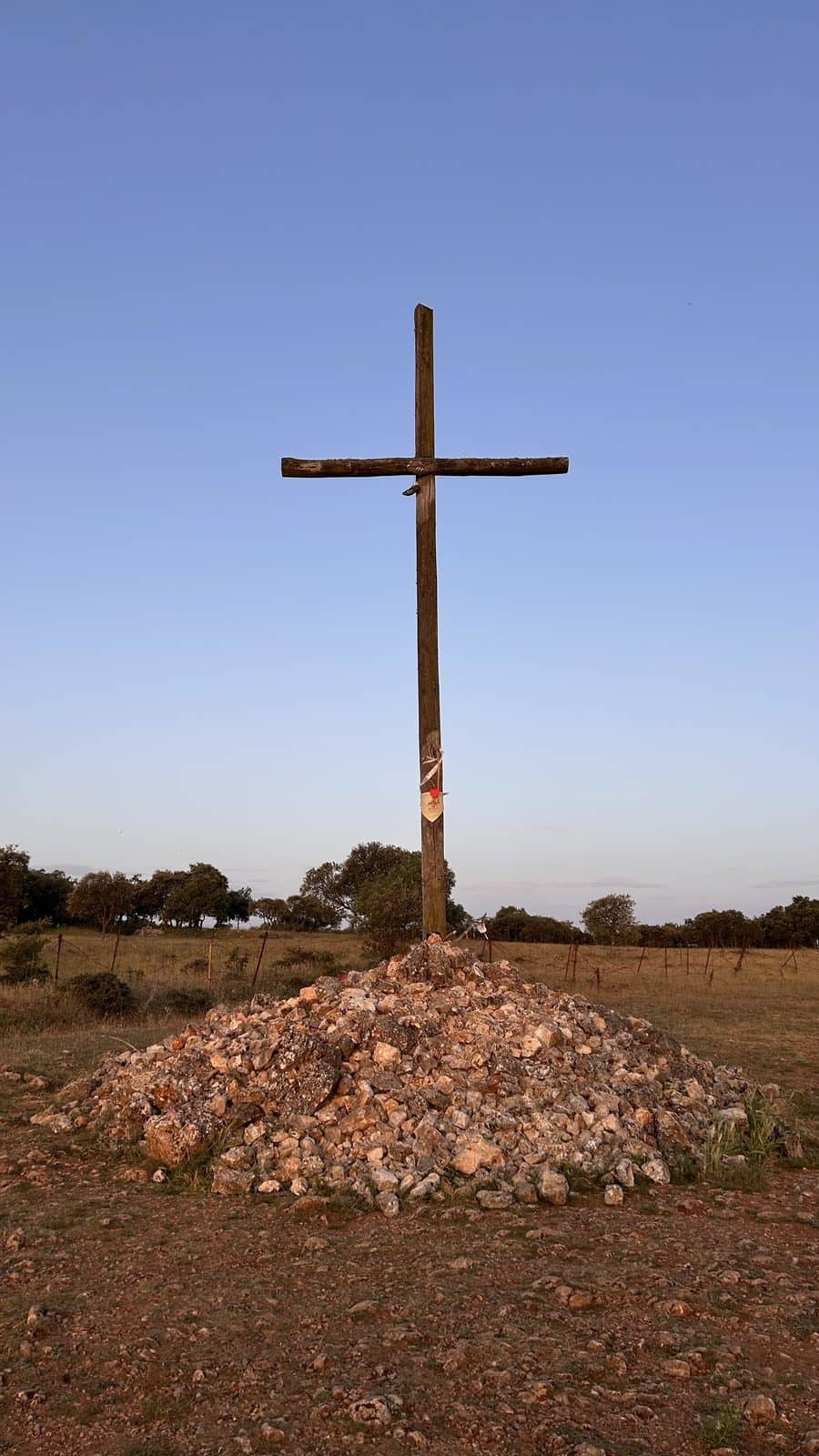
A plain wooden cross rising from a mound of pilgrim stones against a dusk sky.
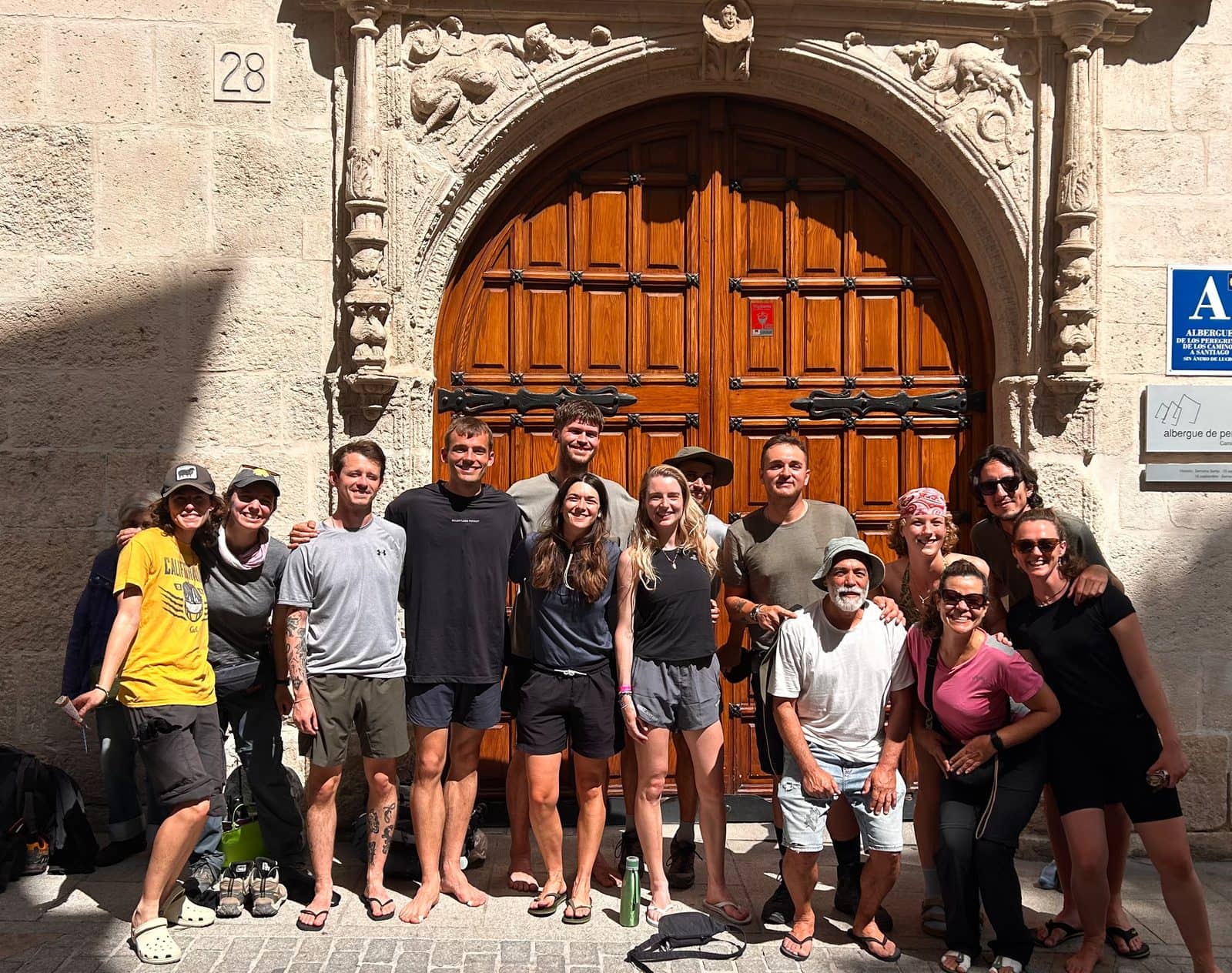
Pilgrim friends gathered at night before a carved Baroque church doorway.
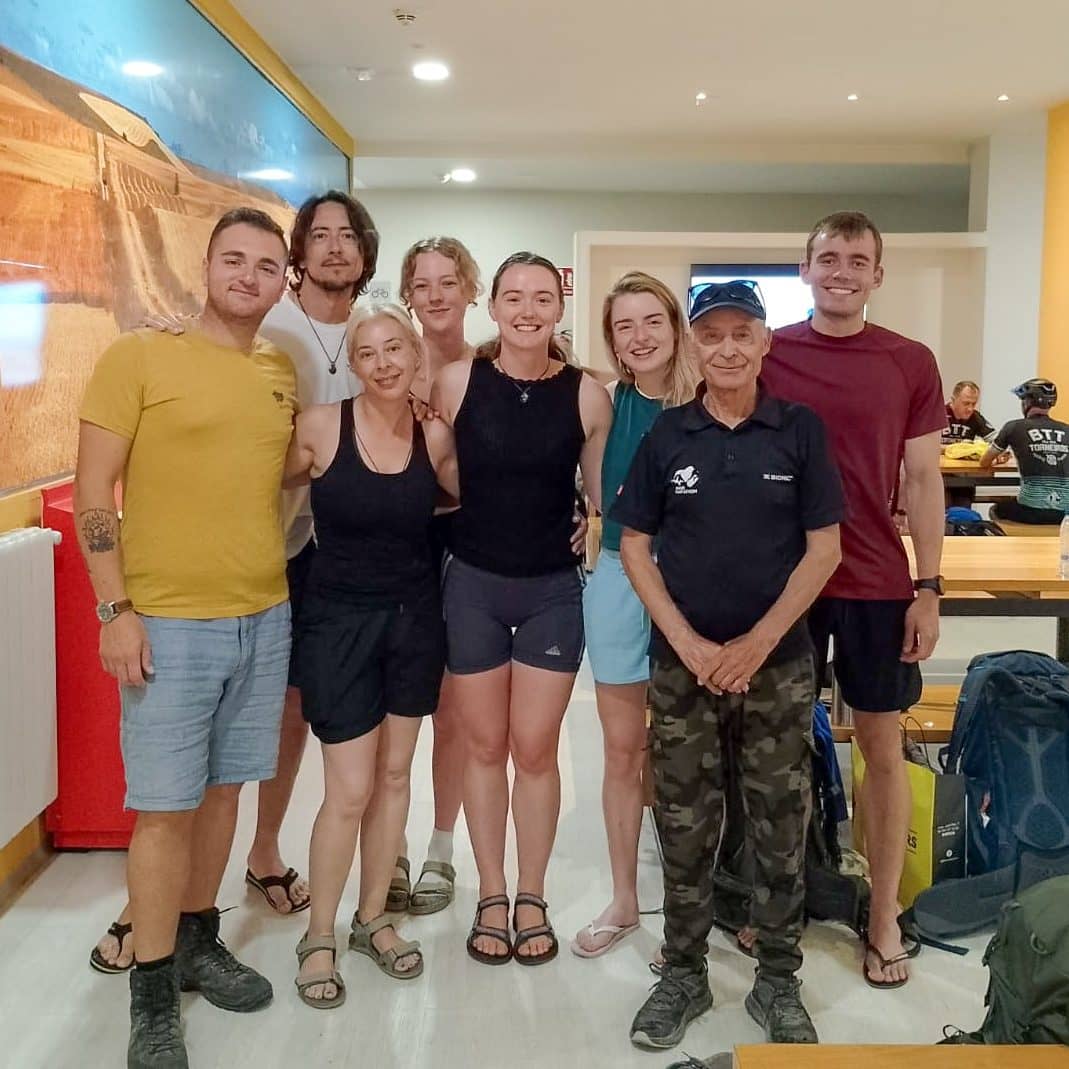
Pilgrims lined up smiling with their hospitalero inside an albergue.
Albergue nights — a new family every evening.
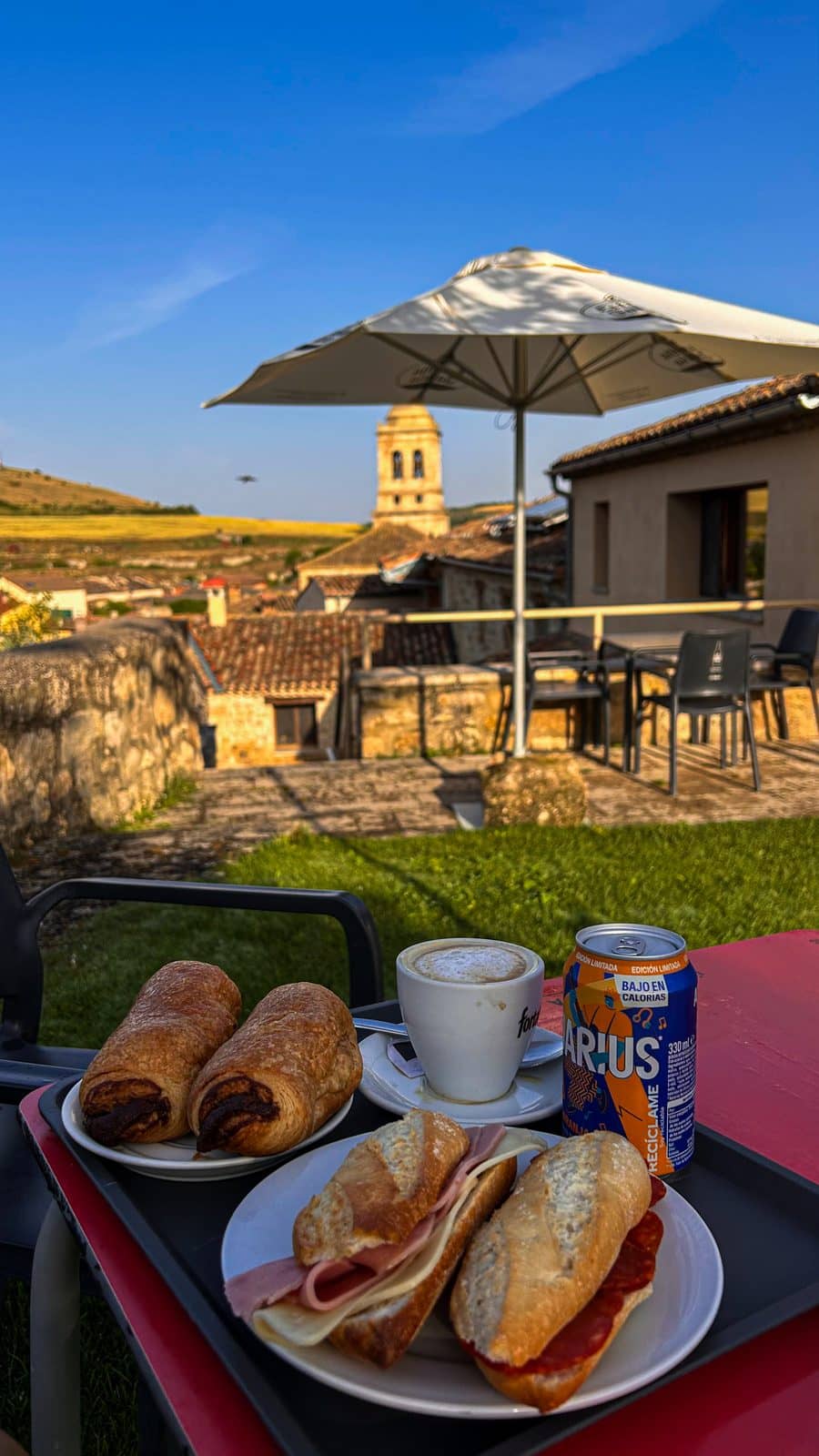
Bocadillos and café con leche on a terrace table, a Spanish church tower behind.
Second breakfast, a Camino institution.
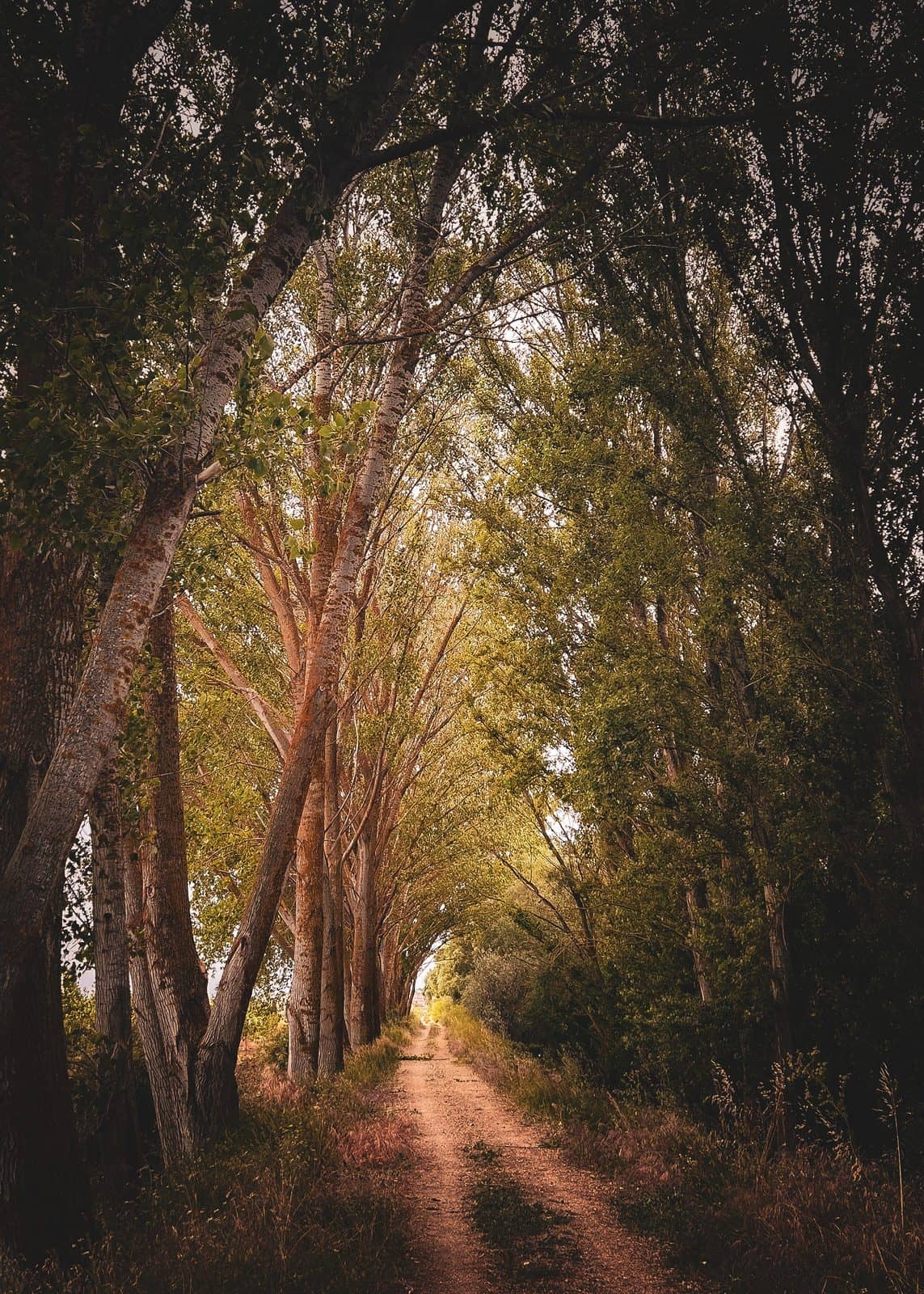
The dirt path running through a tunnel of tall poplars in golden light.
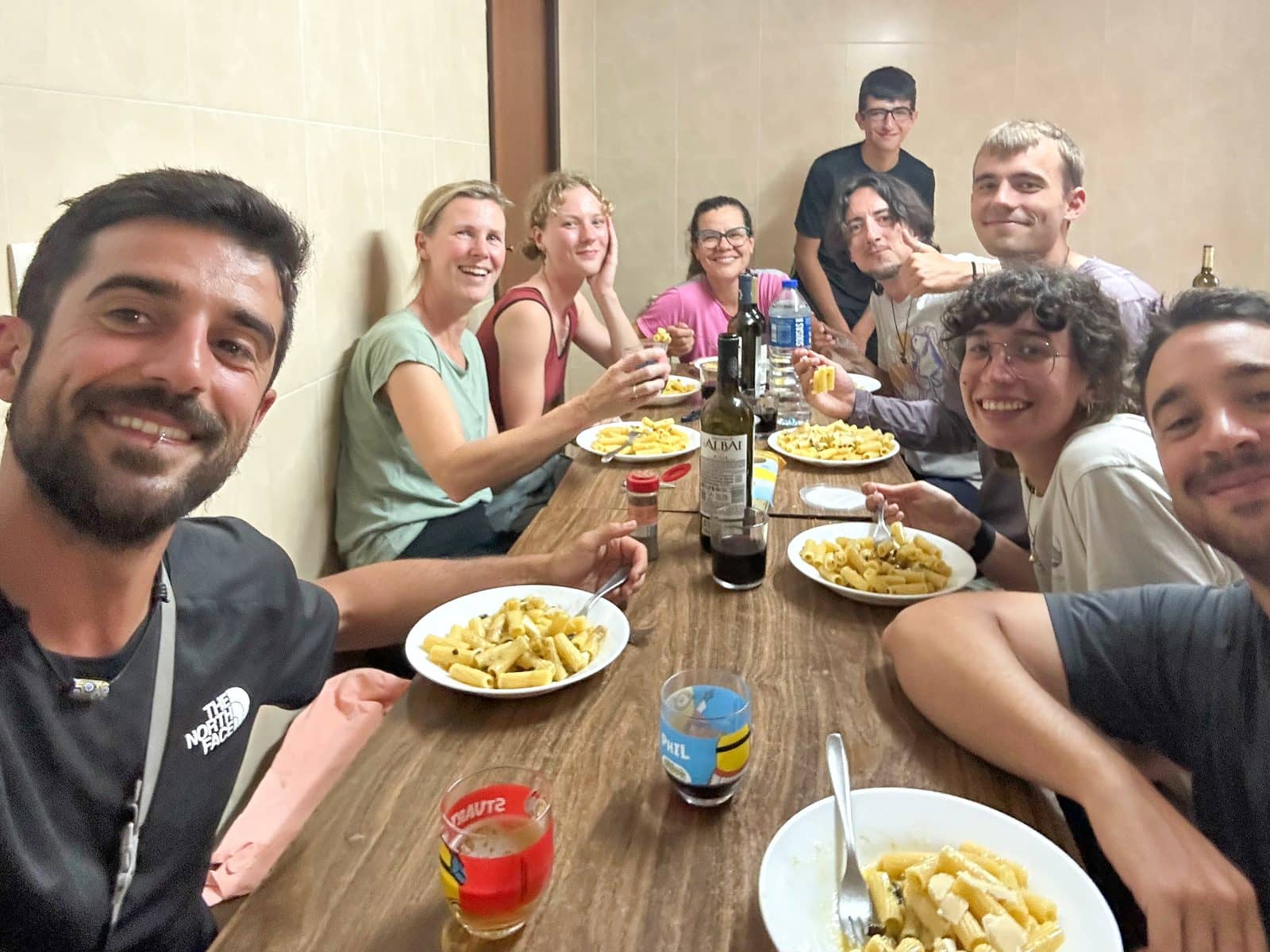
A communal pilgrim dinner around one table — pasta, wine, and laughter.
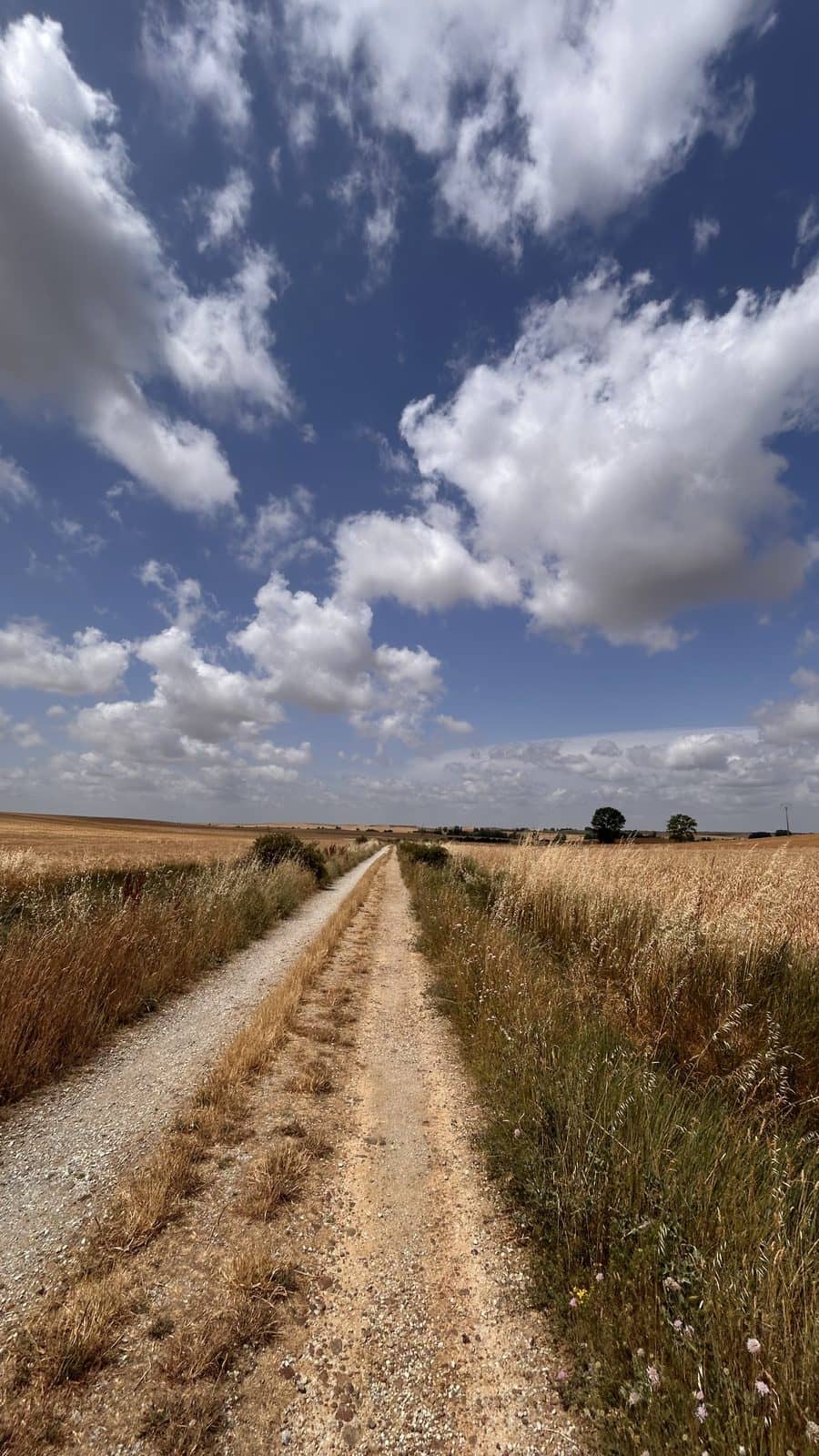
A straight gravel track running to the horizon through wheat fields under an enormous sky on the Meseta.
The Meseta — where the walk becomes interior.
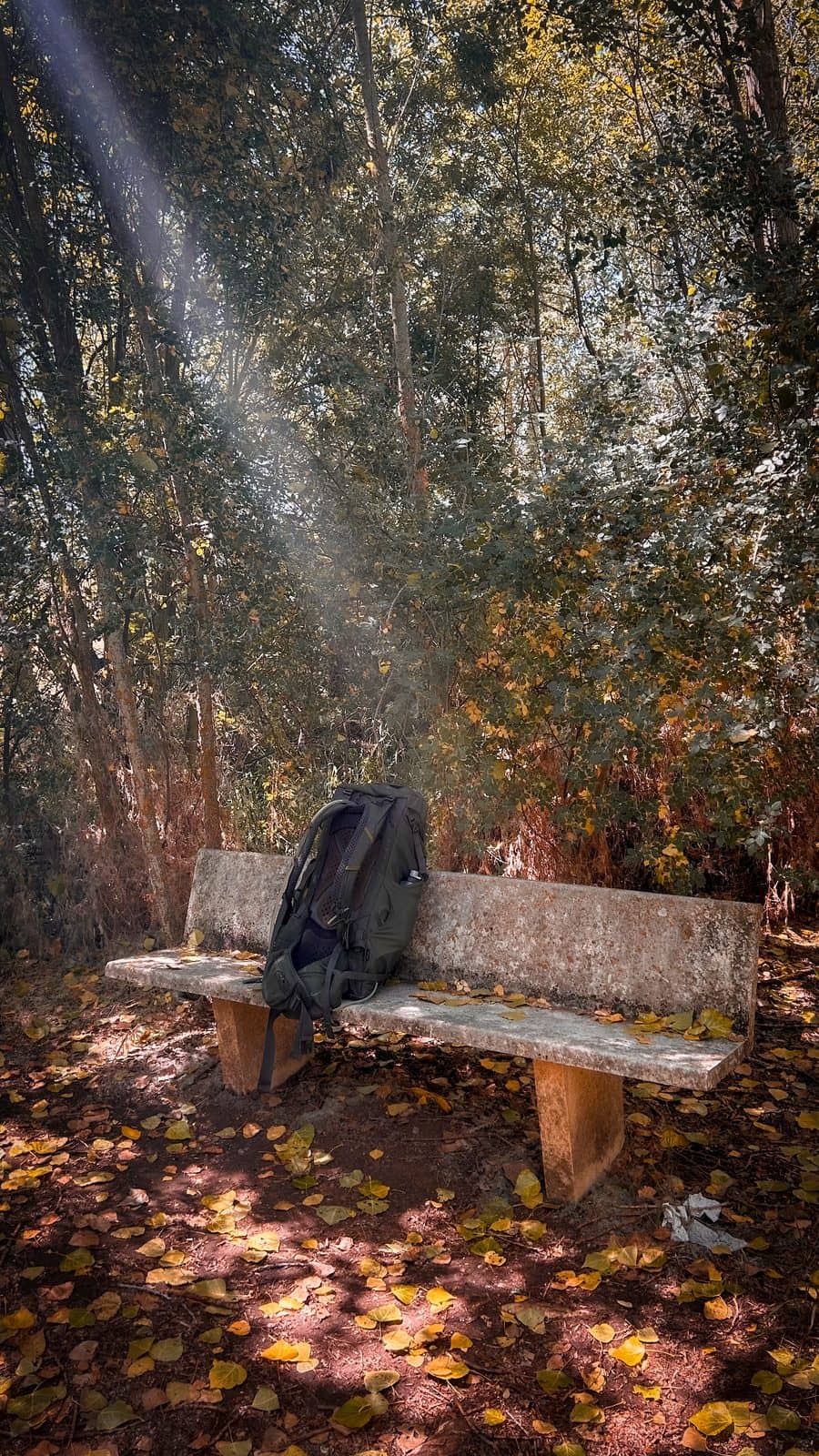
A backpack resting on a stone bench beneath golden falling leaves.
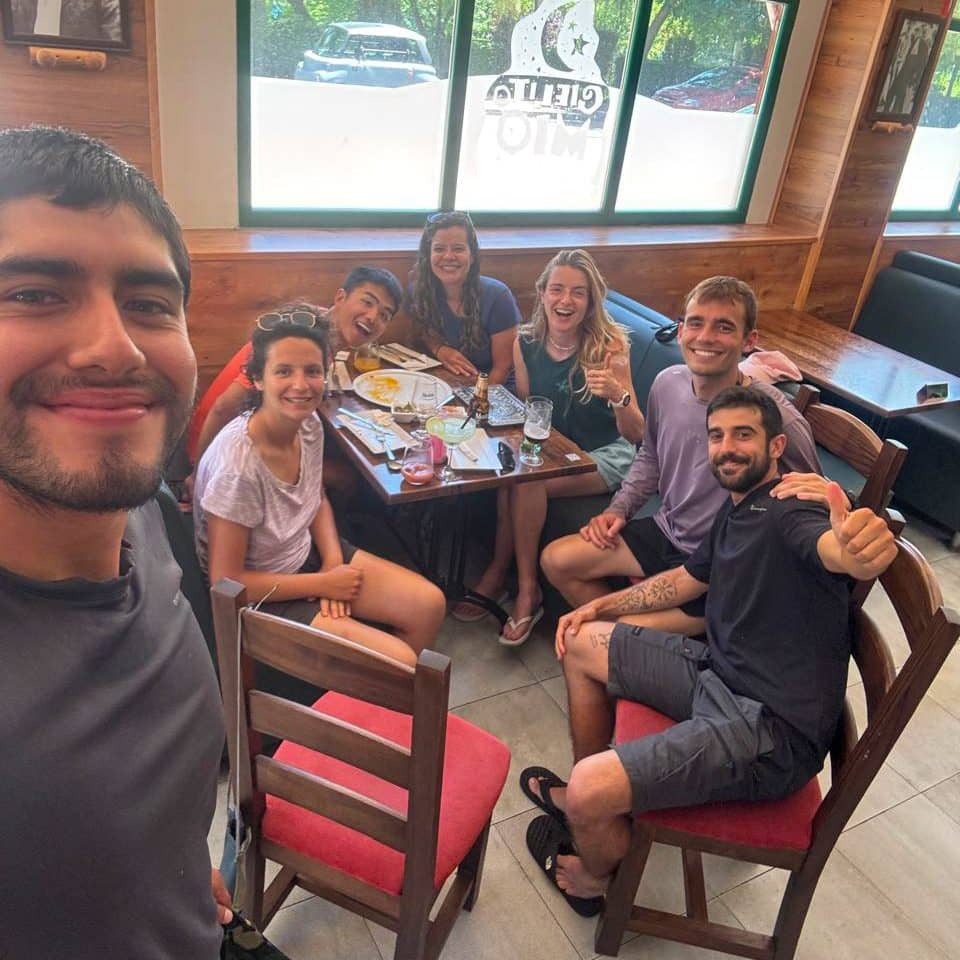
Six pilgrims crowded around a café table, grinning at the camera.
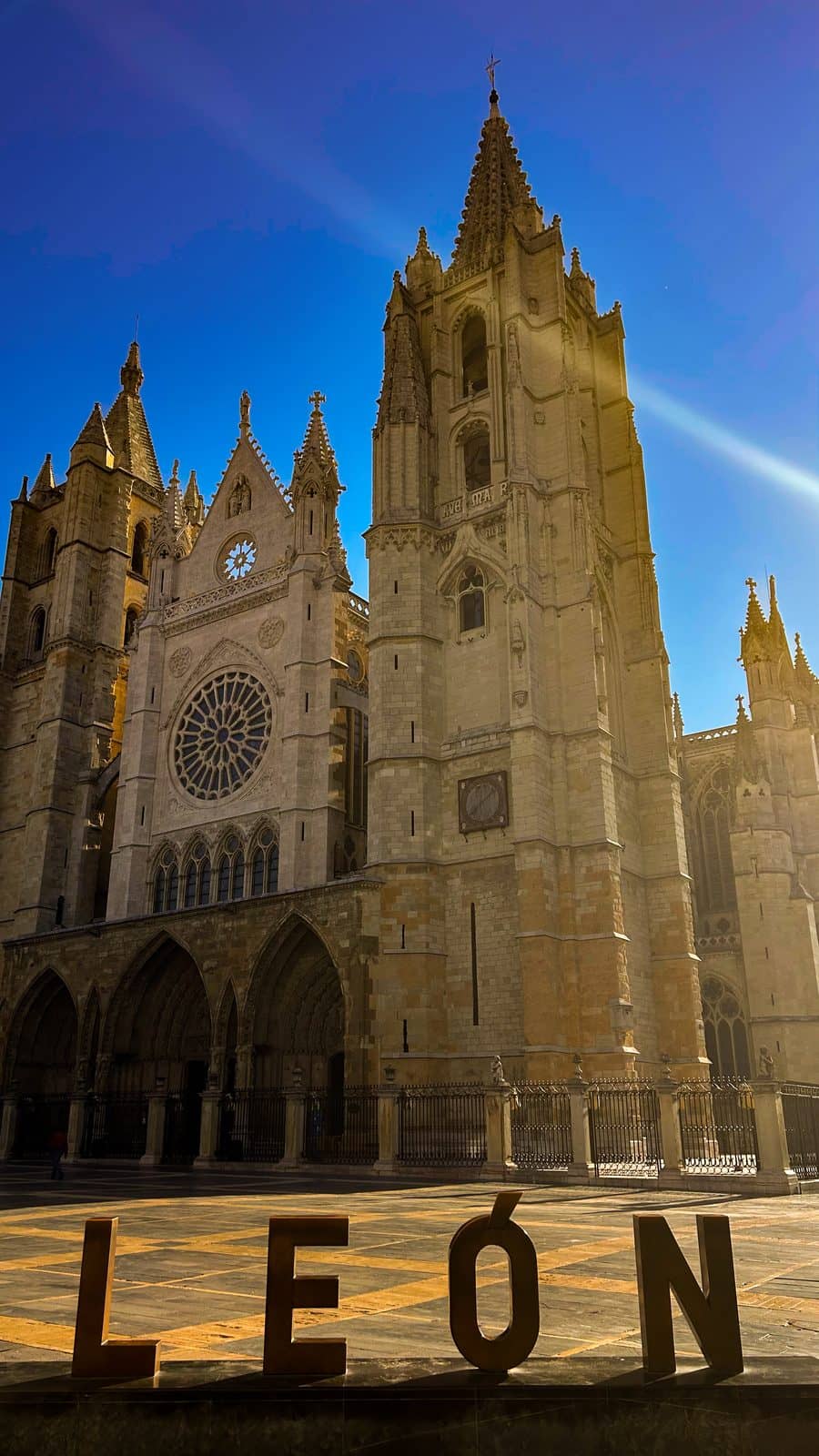
León Cathedral's Gothic towers rising behind the city's large LEÓN letters.
León, the Gothic midpoint.
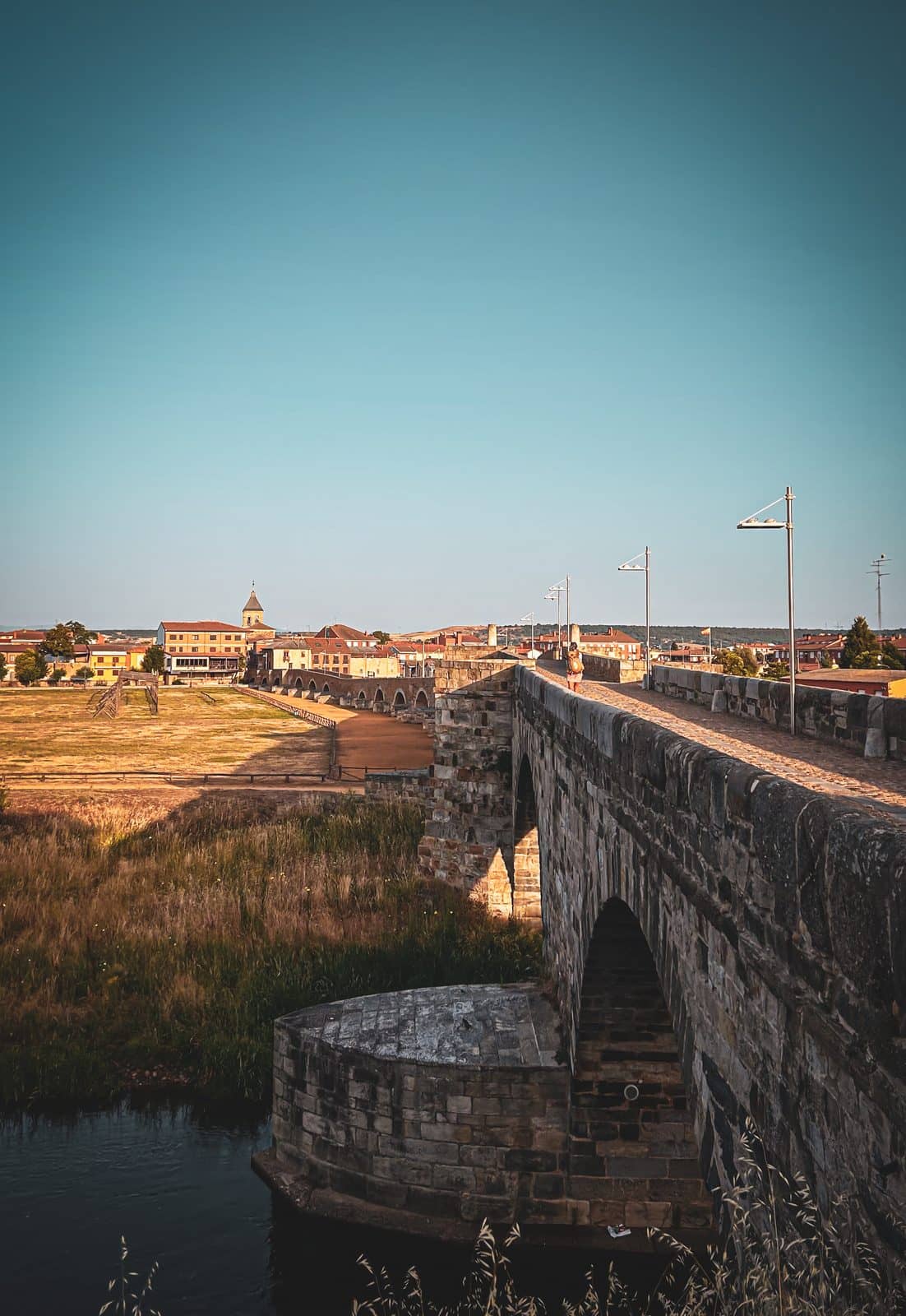
A long medieval stone bridge spanning the river into a small town west of León.
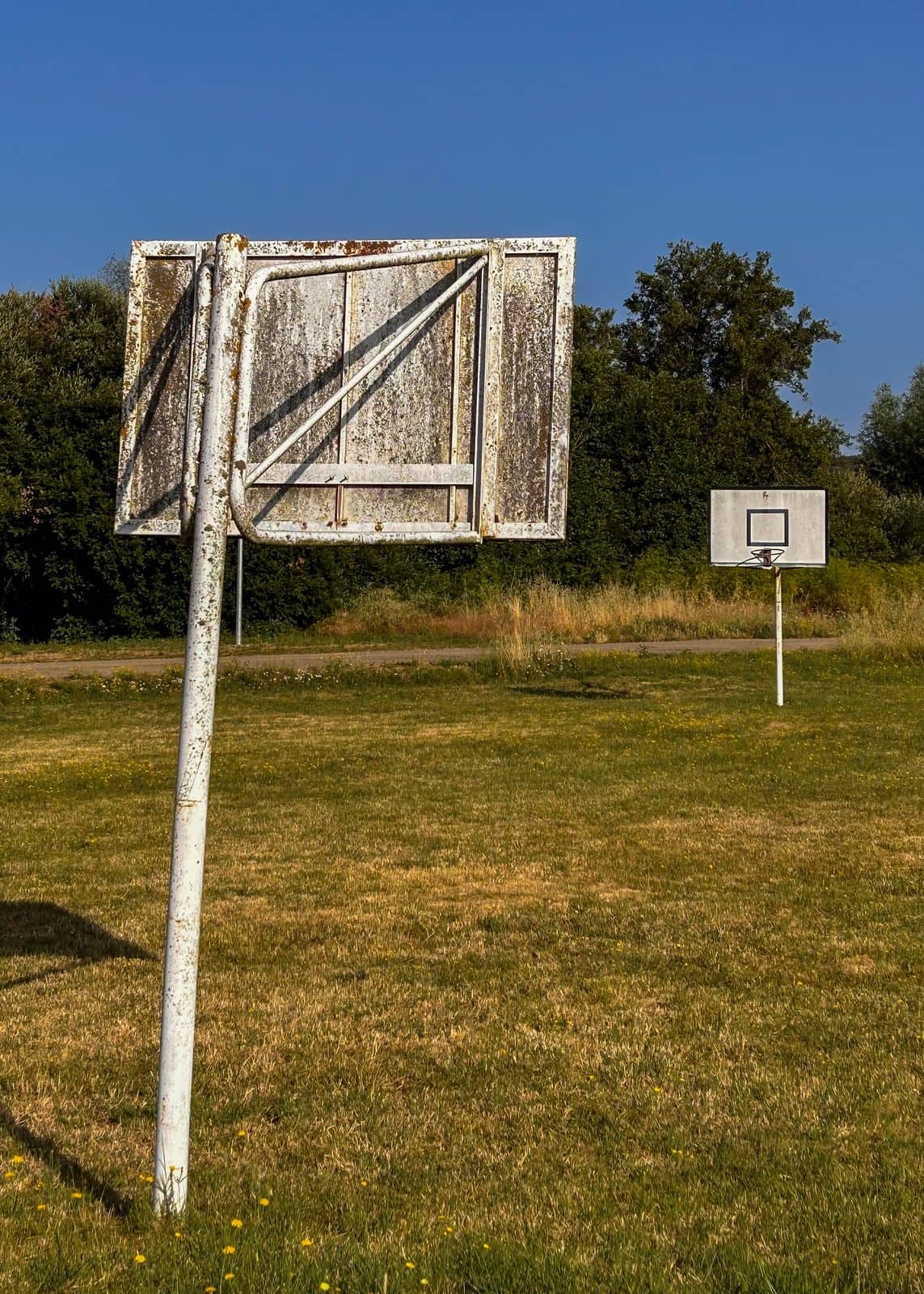
Weathered wooden basketball backboards standing in a grassy village field.
The game finds you everywhere.
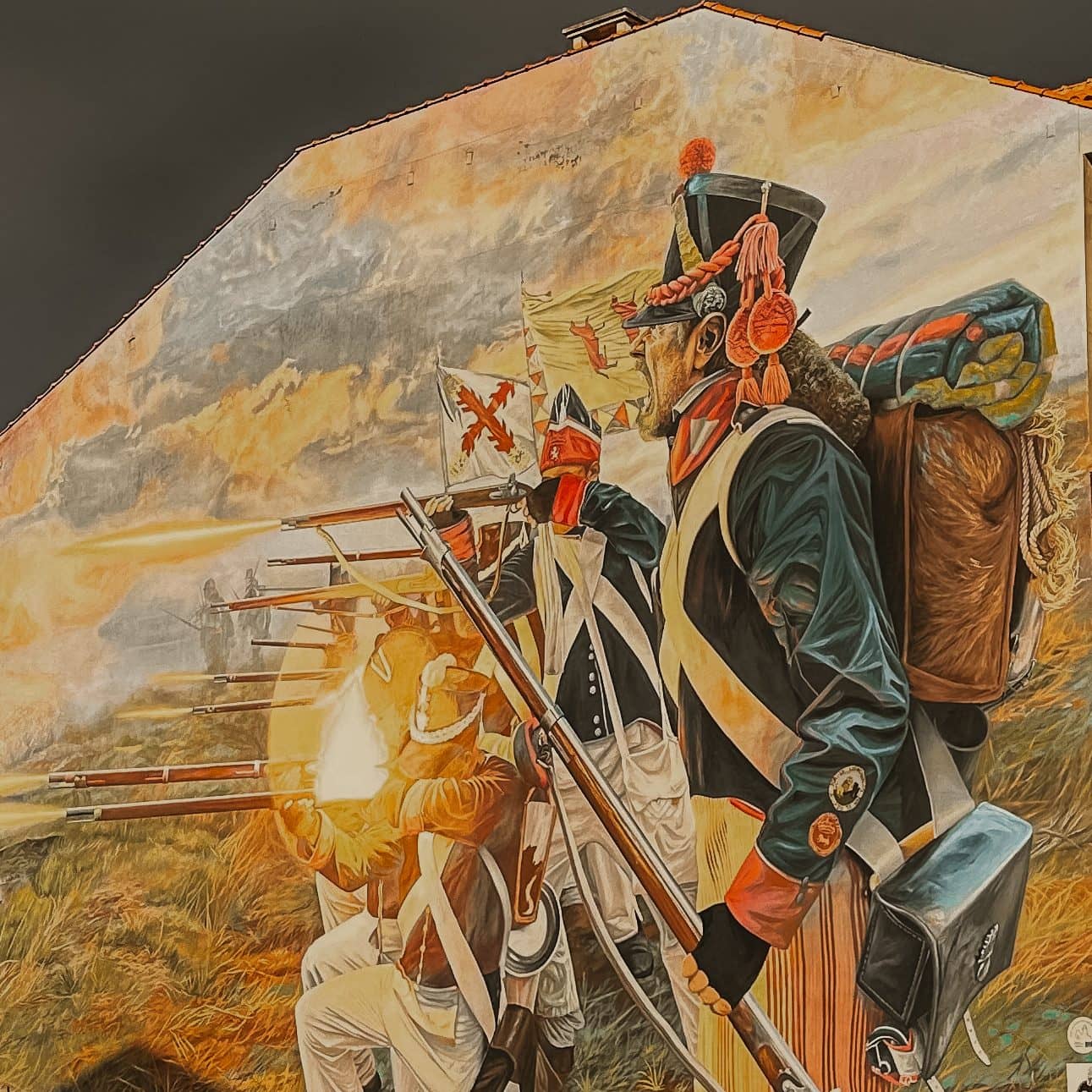
A large mural of Napoleonic-era soldiers painted on a village wall along the route.
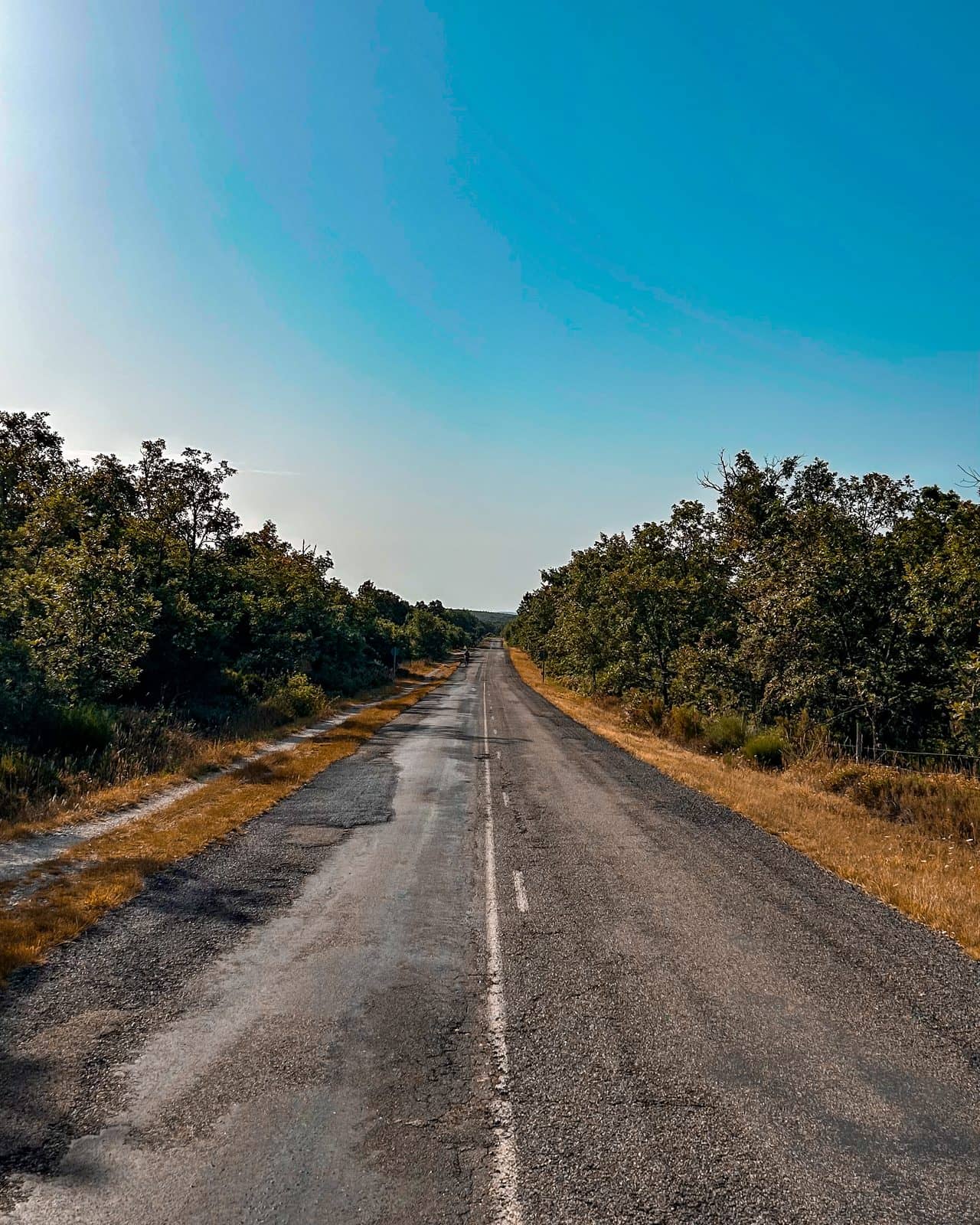
An empty two-lane road at first light, trees dark on either side.
Most days began before sunrise.
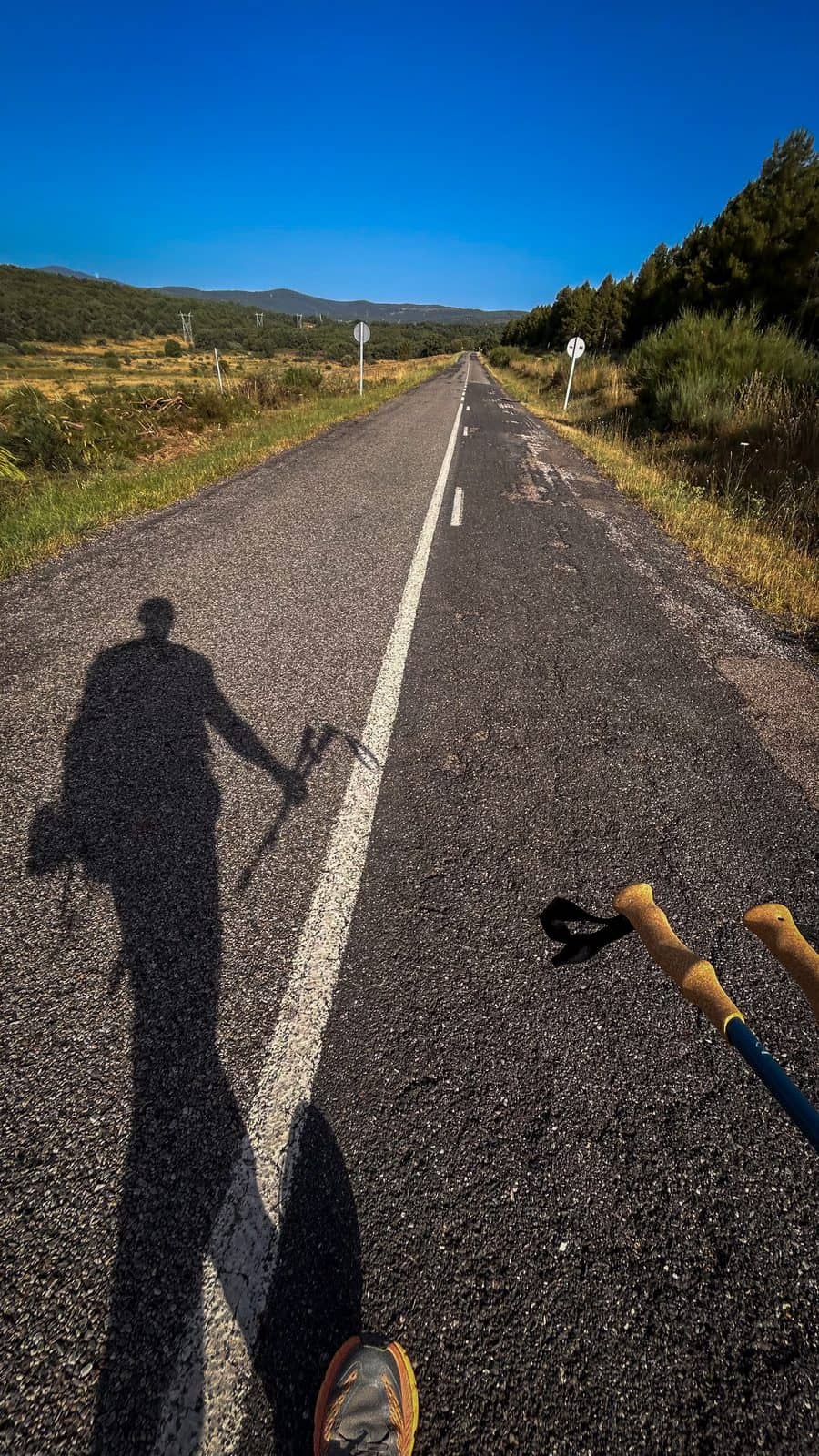
The walker's long morning shadow stretched across empty asphalt, trekking poles in hand.
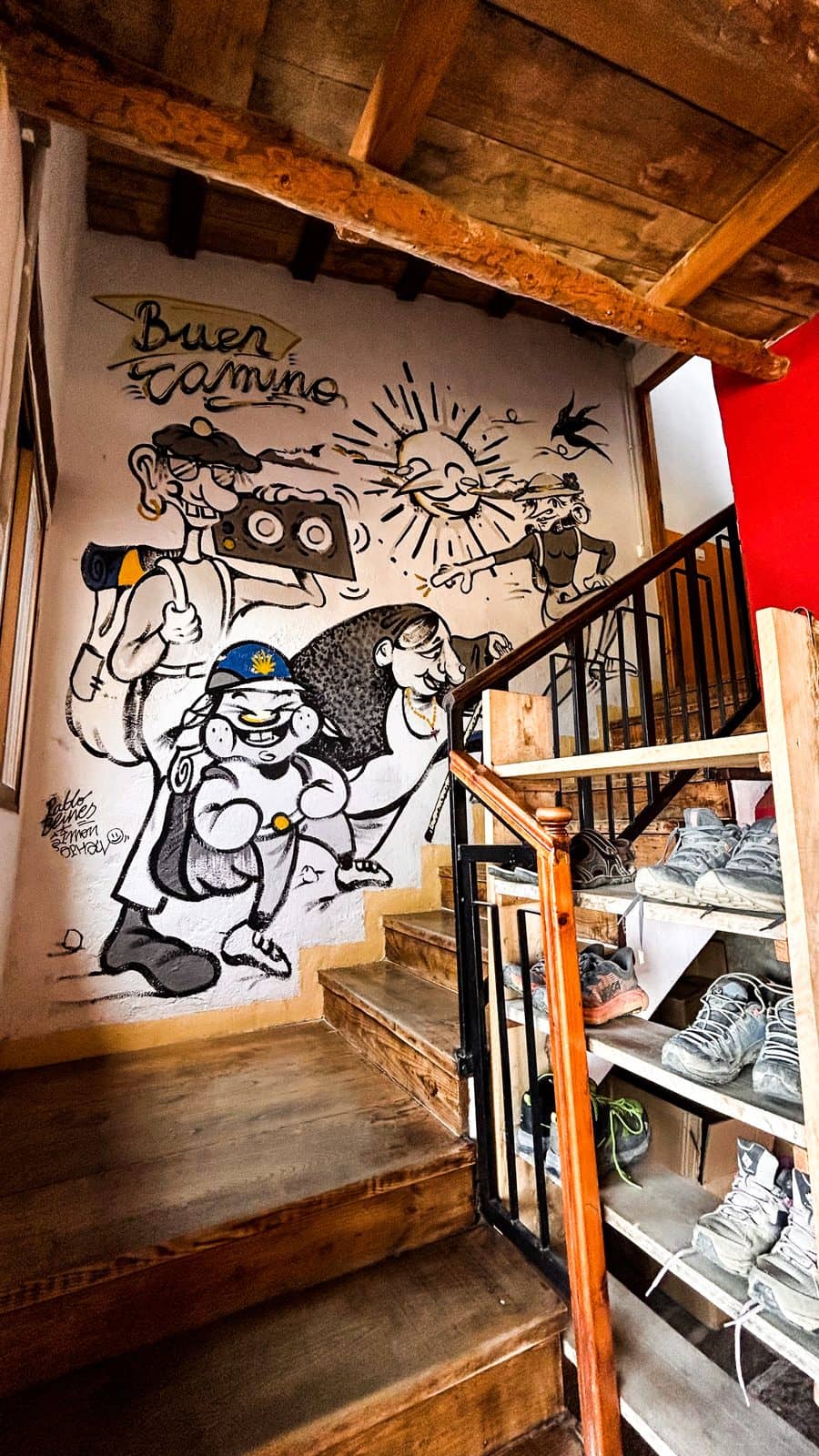
An albergue stairwell with hiking boots shelved below a hand-painted Buen Camino mural.
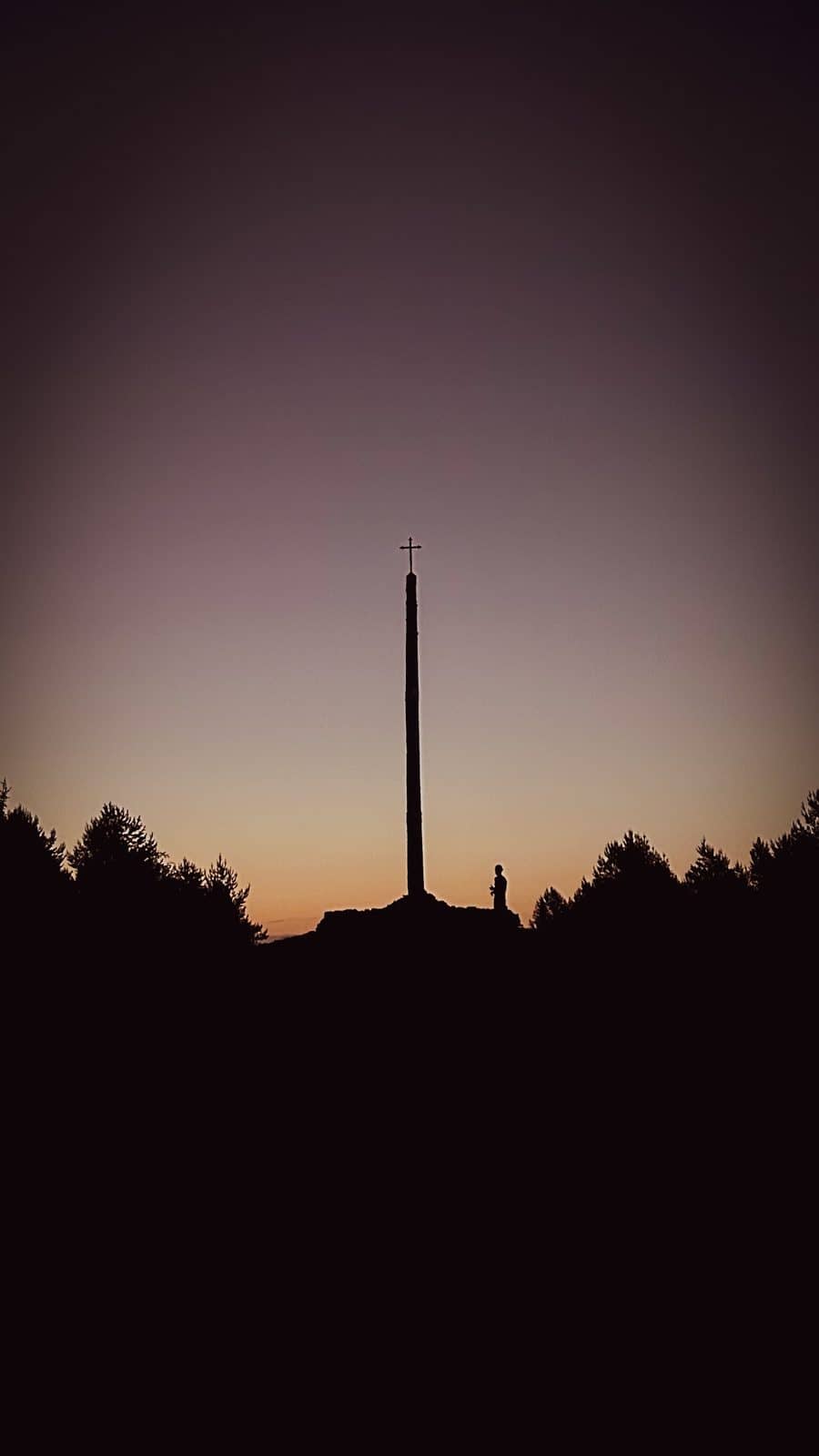
The silhouette of the Cruz de Ferro rising from its mound of pilgrim stones against a violet dawn sky.
Cruz de Ferro — pilgrims leave a stone carried from home.
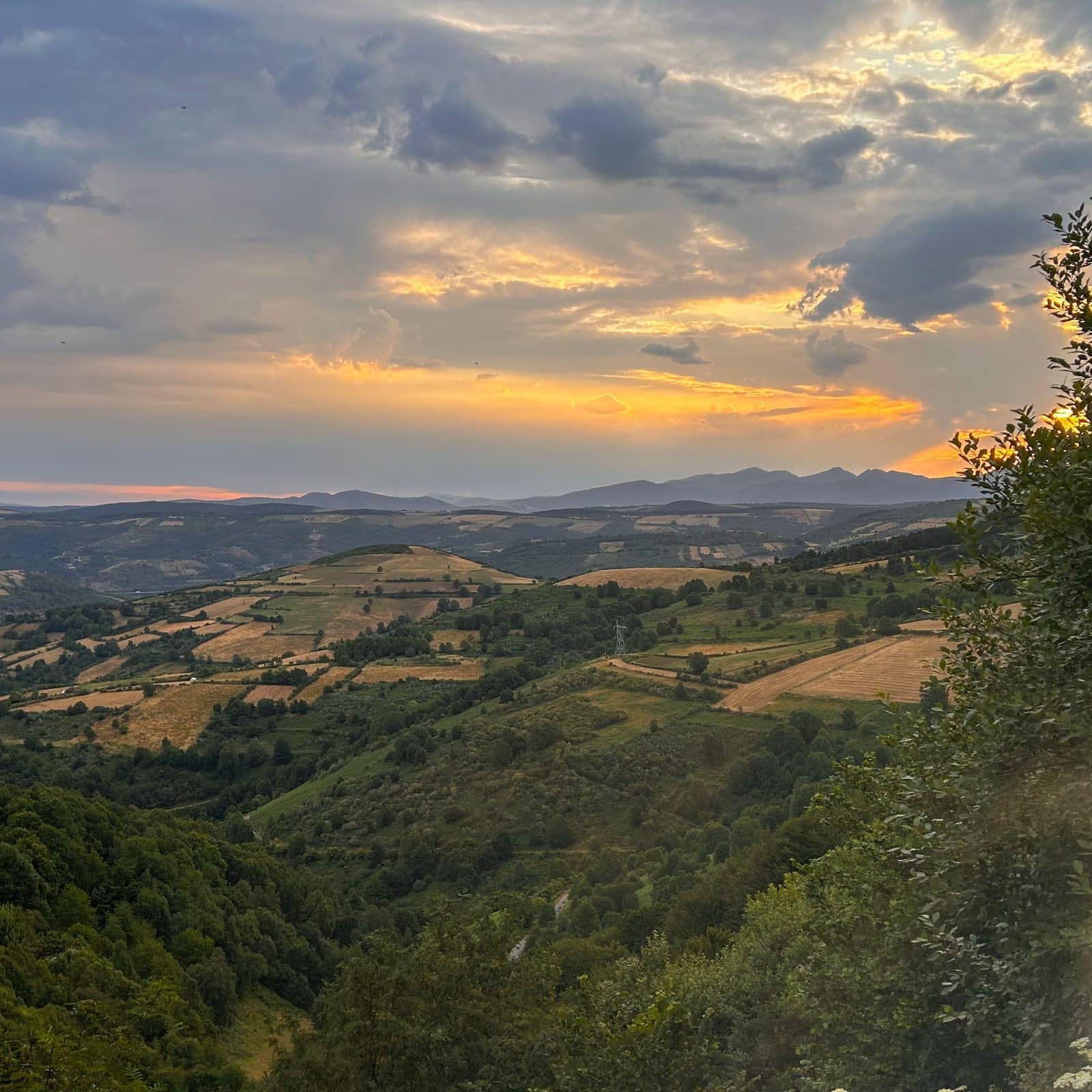
Evening light breaking over green folded hills in the western mountains.
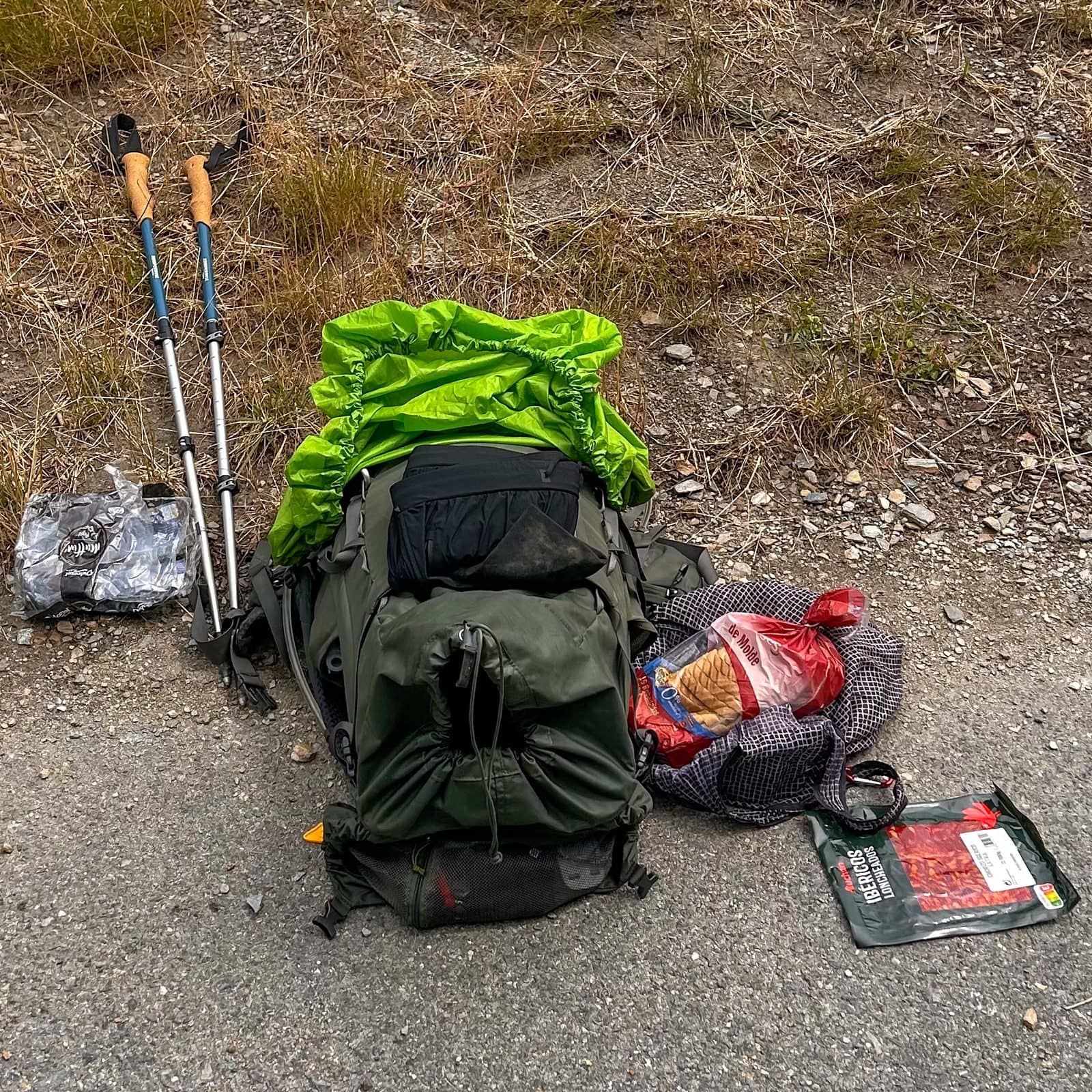
A loaded backpack, trekking poles, and the day's provisions laid out on gravel beside the trail.
Everything owned, carried.
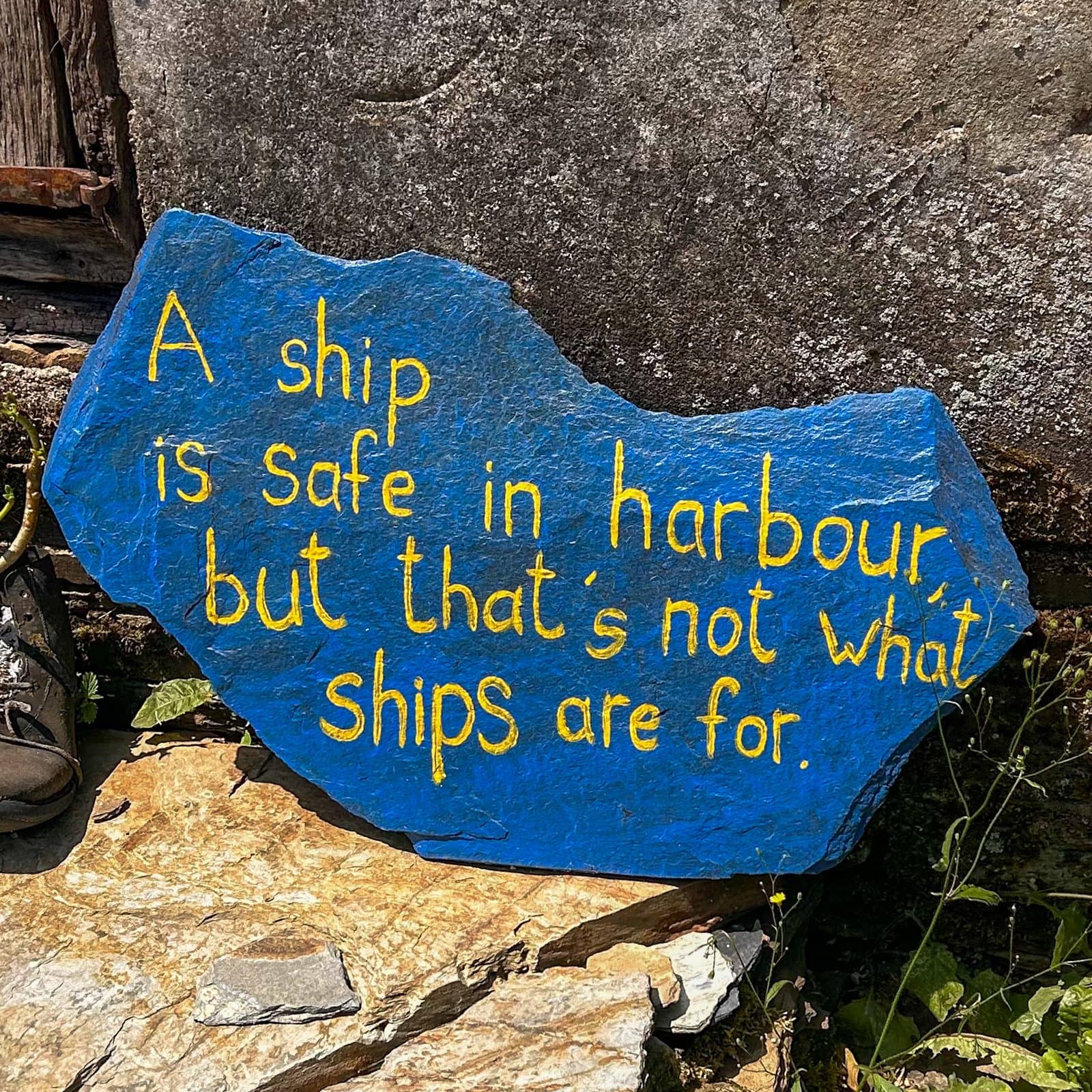
A blue-painted trail stone reading: a ship is safe in harbour, but that's not what ships are for.
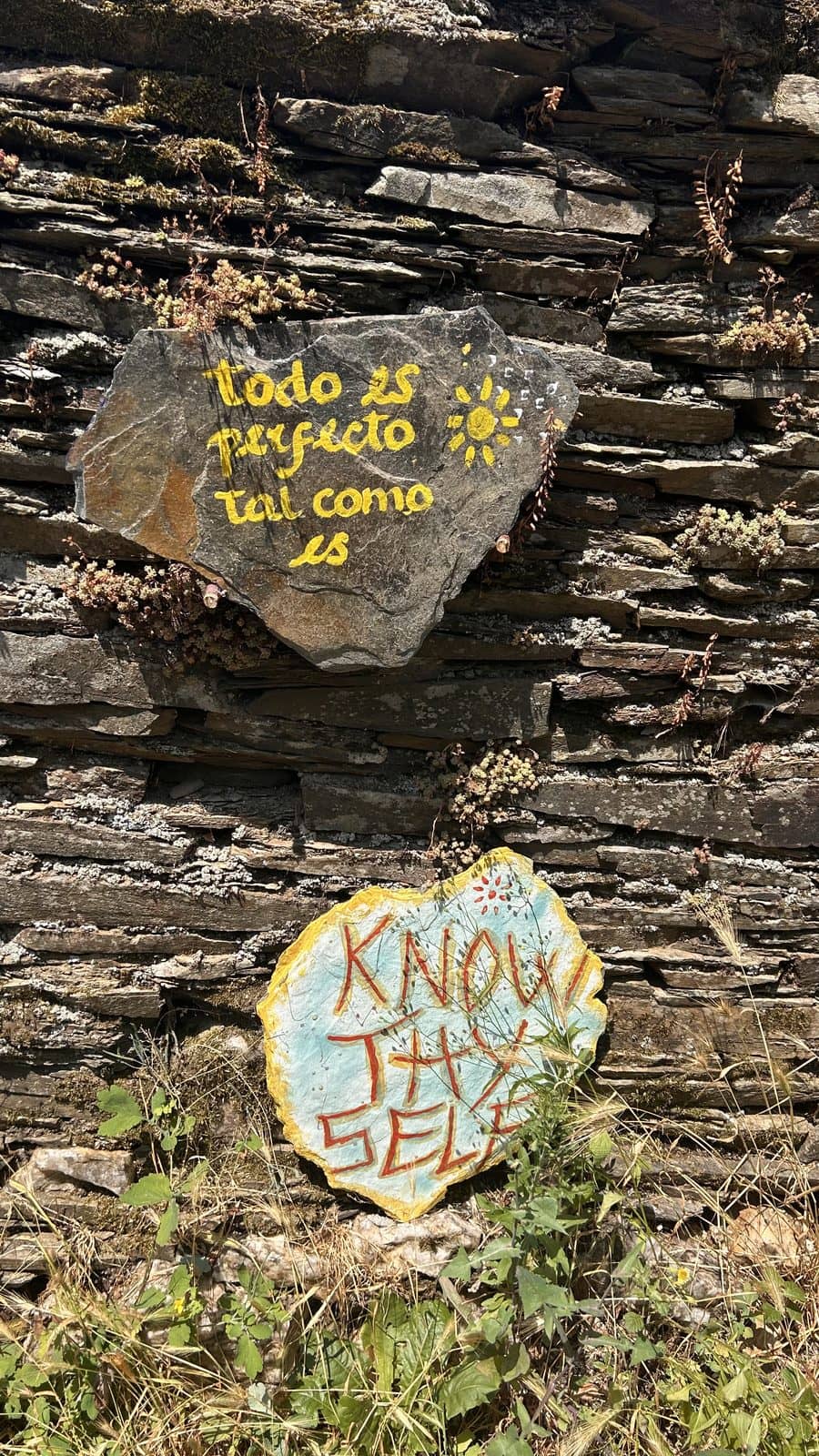
Painted stones tucked into a Galician slate wall reading Know Thyself and todo es perfecto tal como es.
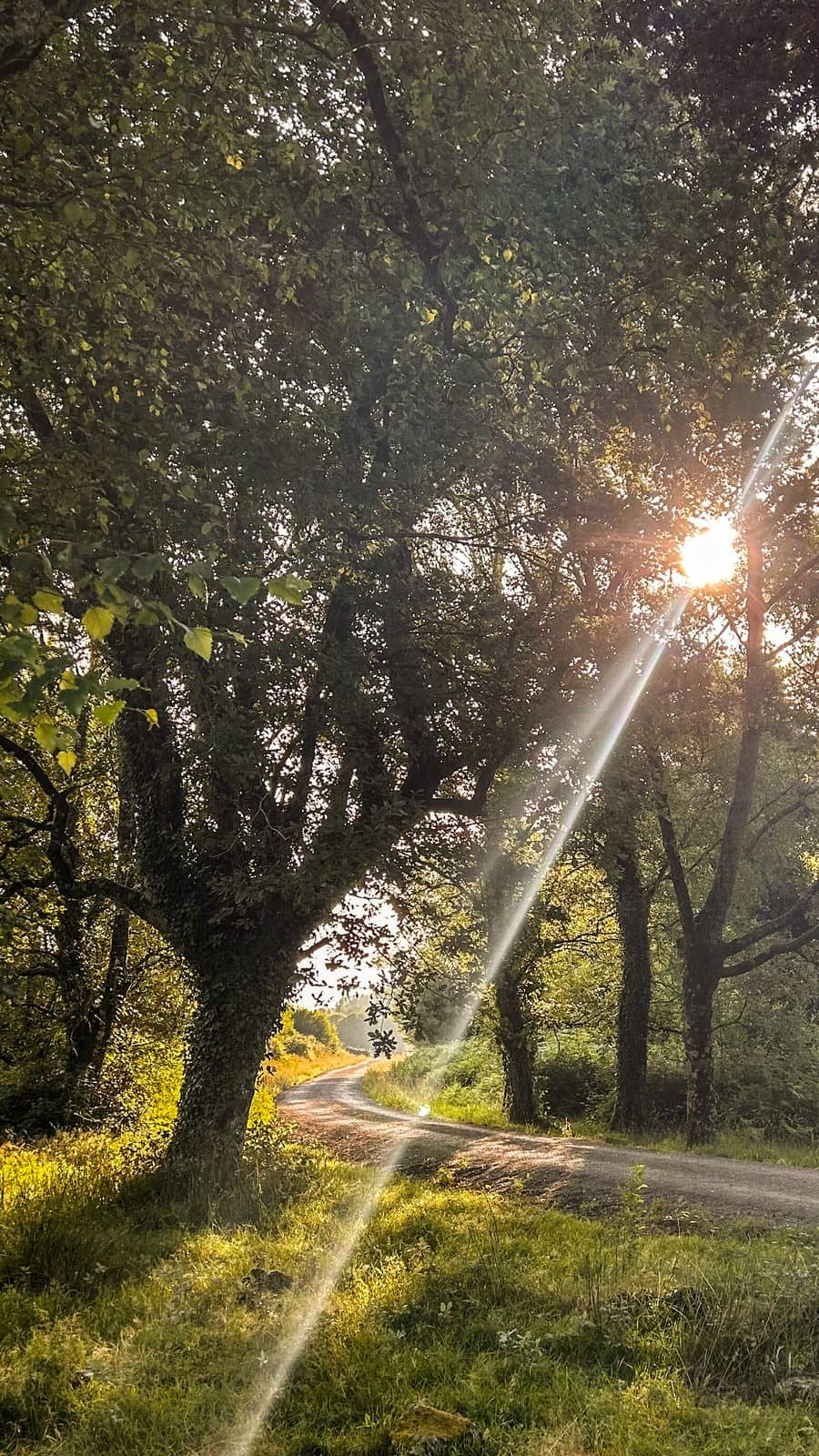
Morning sun breaking through Galician oaks over the path as a walker approaches.
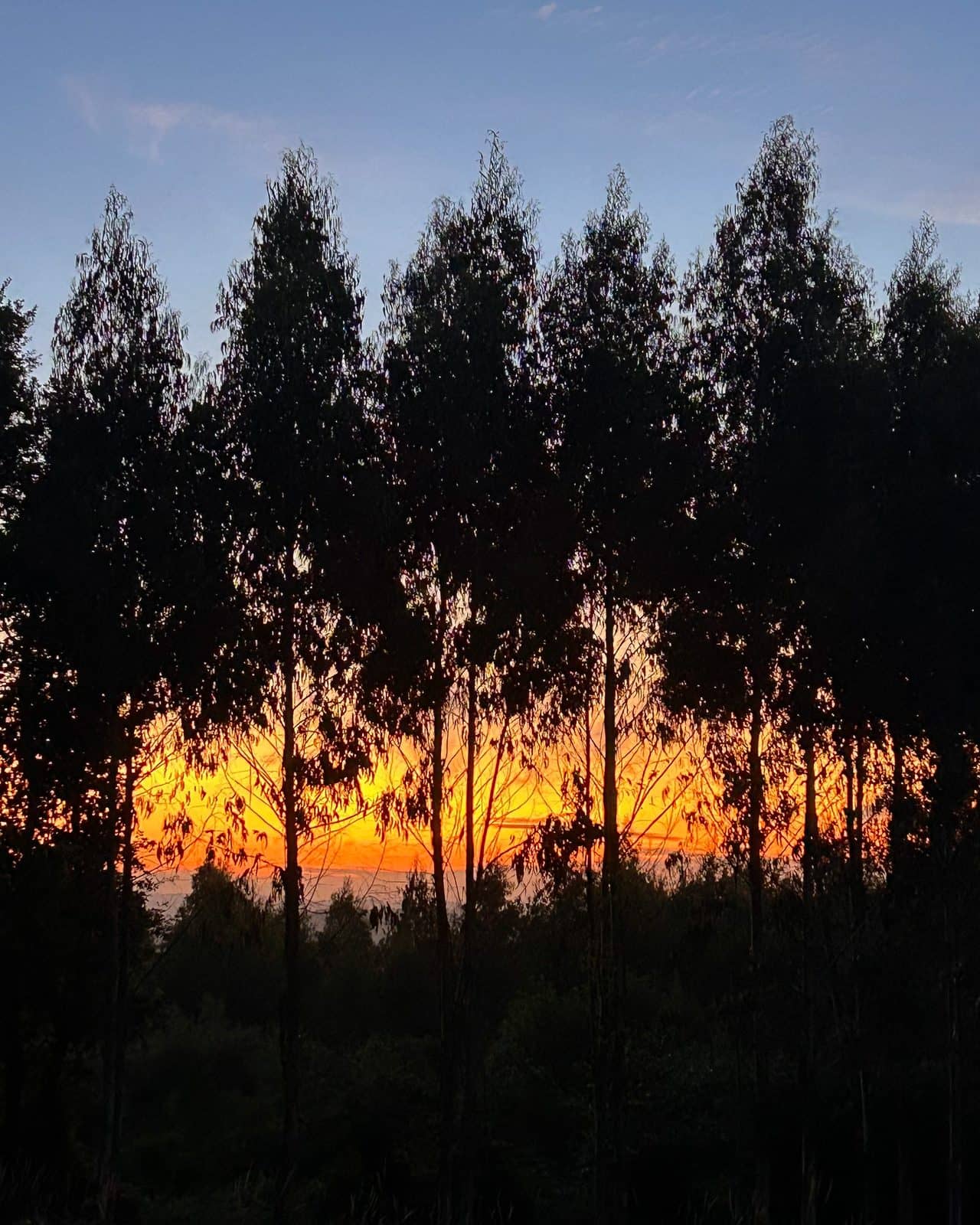
A fire-colored sunrise burning through the silhouettes of eucalyptus trees near the end of the route.
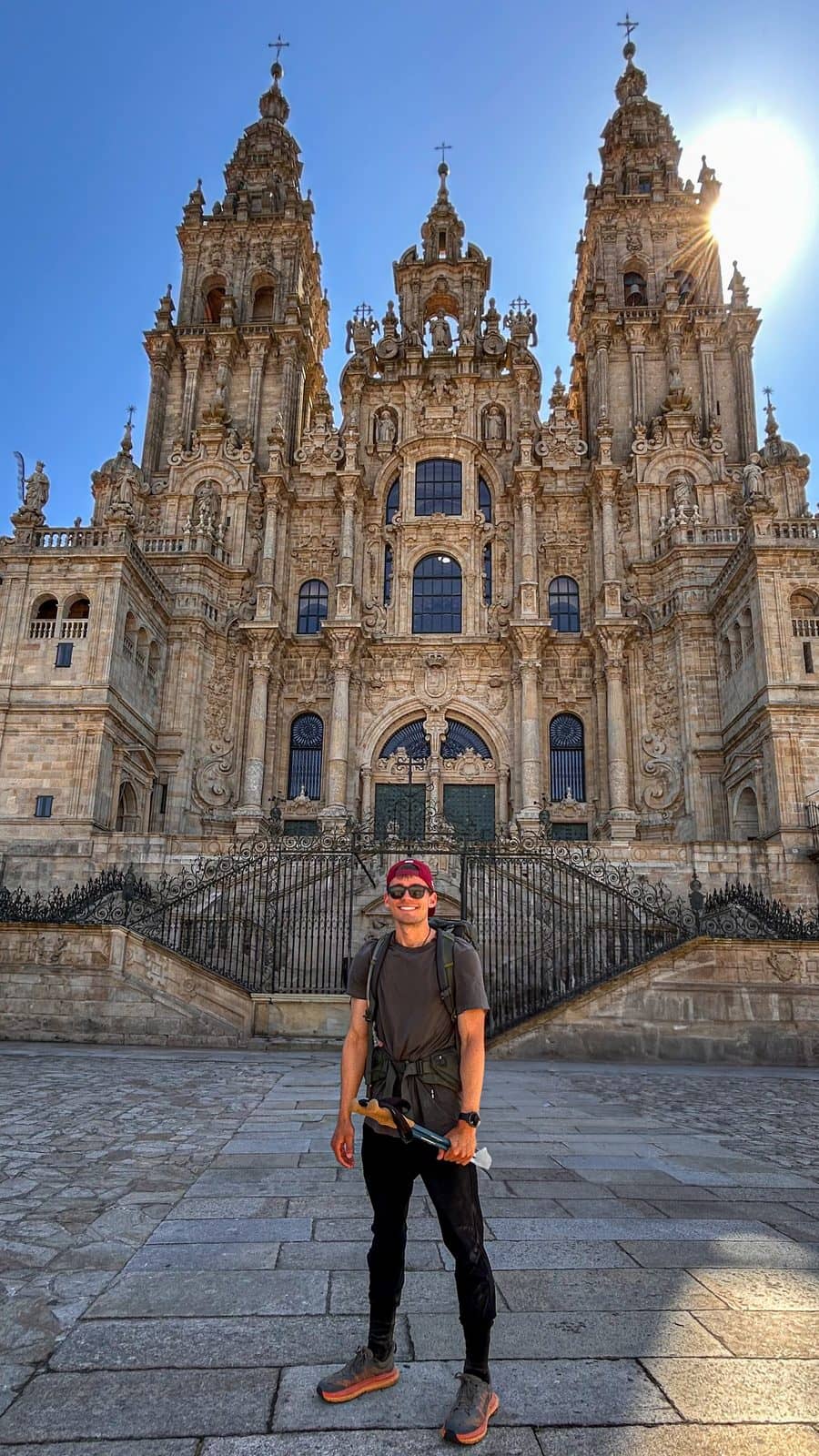
Kyle Wisniewski standing alone before the Cathedral of Santiago de Compostela at the end of 500 miles.
Arrival — Santiago de Compostela.
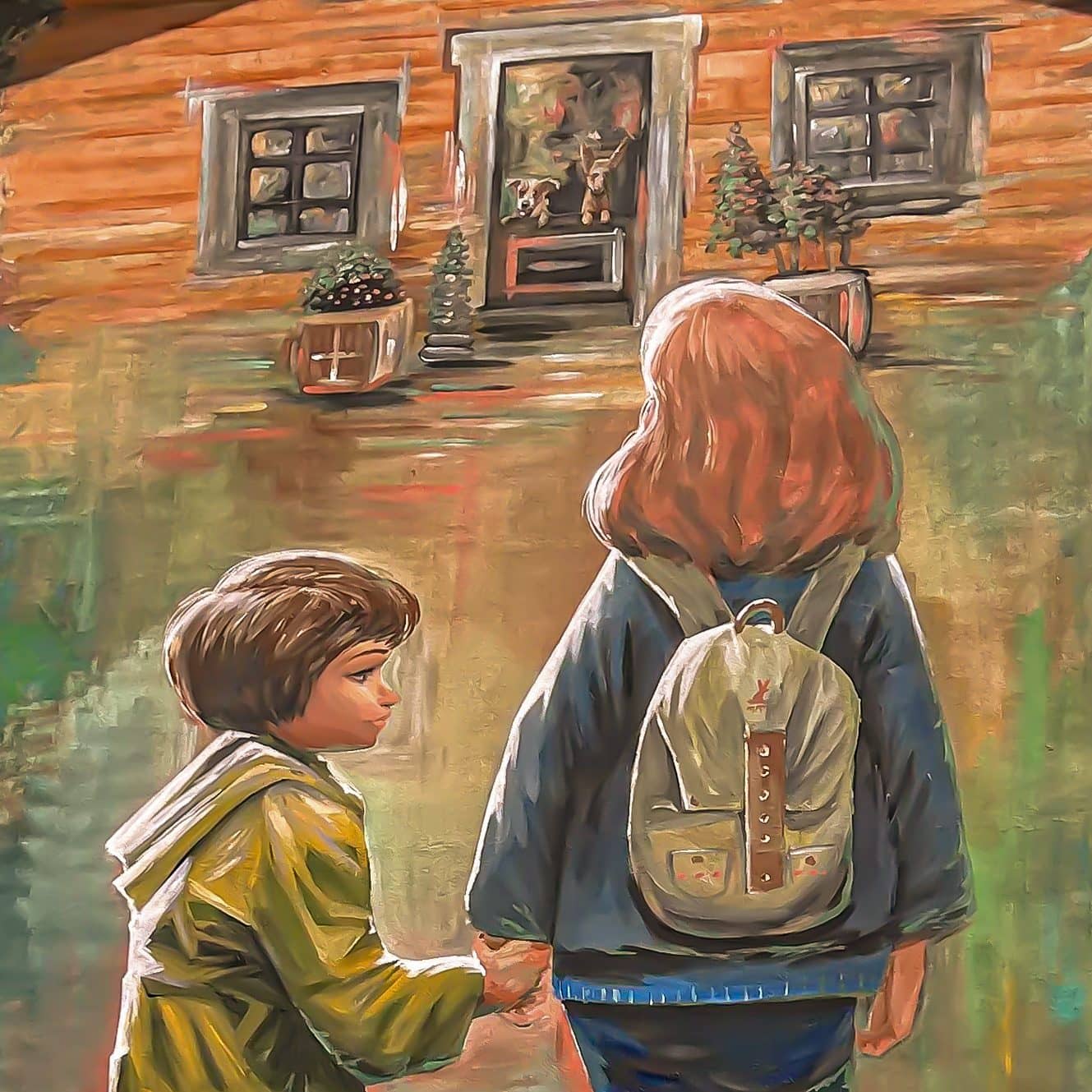
A painted mural of a child taking the hand of a pilgrim with a backpack.
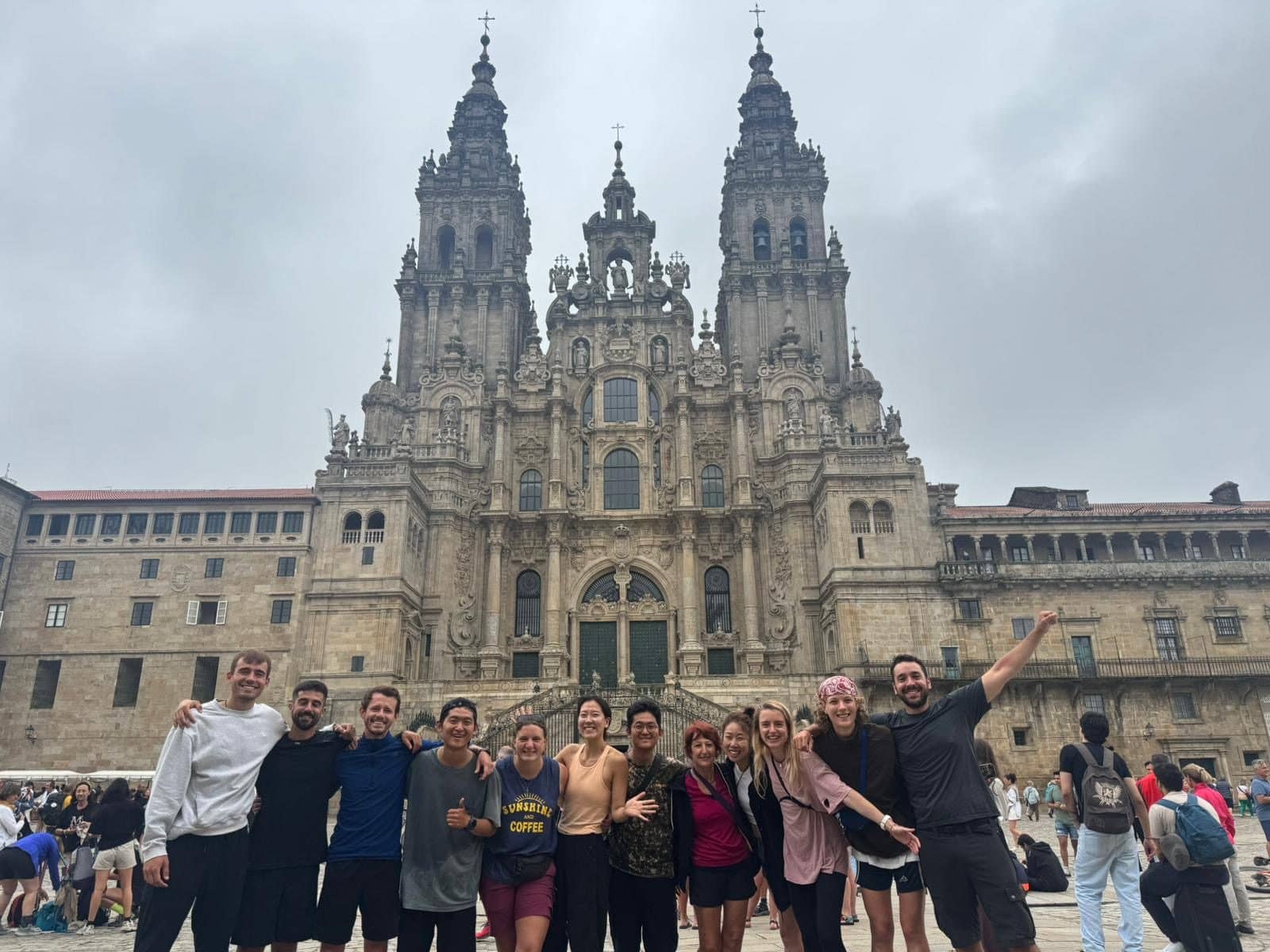
The whole walking family celebrating together in Praza do Obradoiro before the cathedral.
Strangers in week one, family by Santiago.
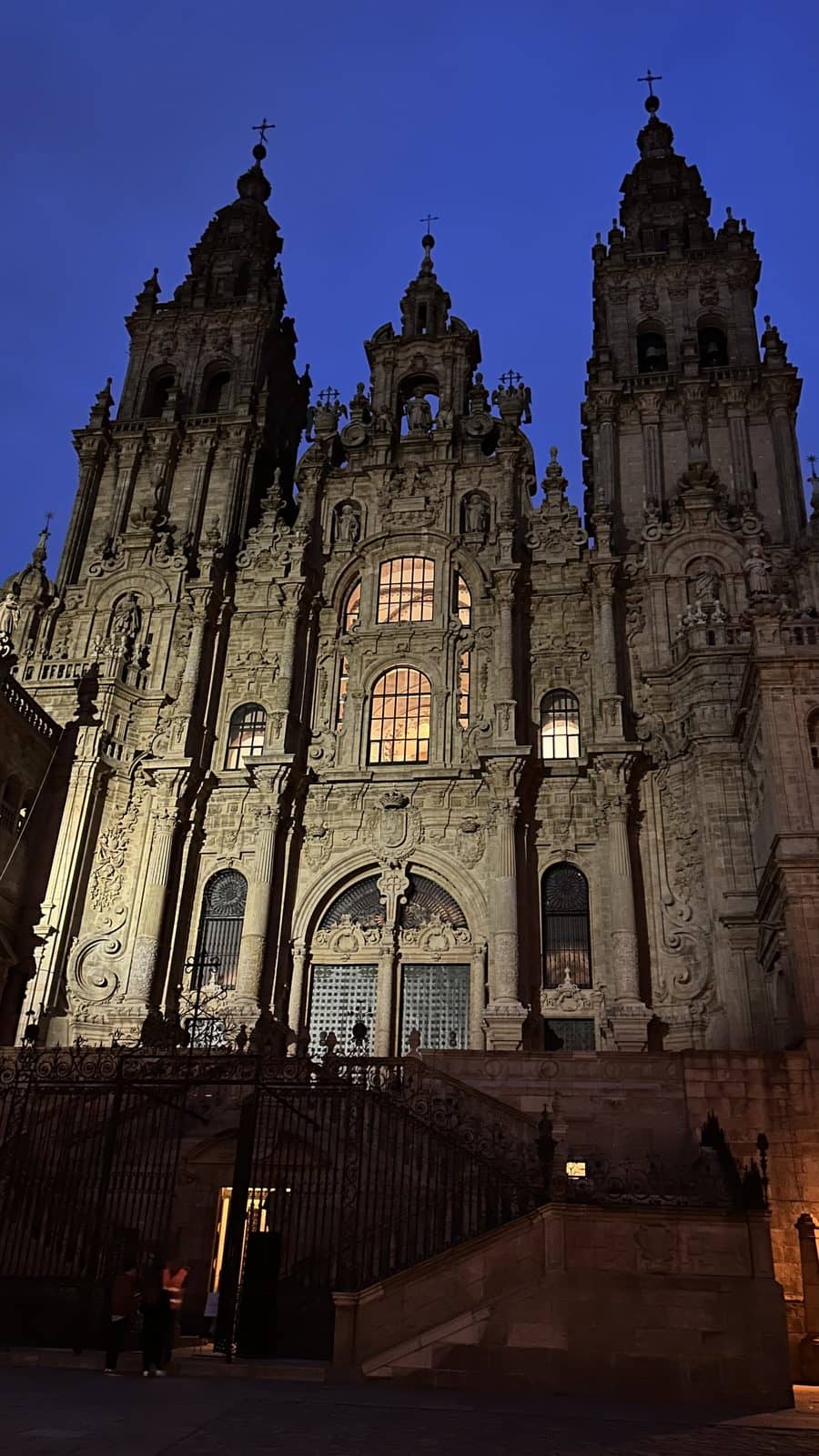
The Cathedral of Santiago de Compostela floodlit against the night sky.
One last look.